🗻 Alpine Landscapes · Volcanic Passes
Hakone Day Trip
Mountain railways, volcanic valley views, and a cruise across Lake Ashi beneath Mt. Fuji.
Hakone is a vast, beautiful national park region nestled in the volcanic mountains near Mt. Fuji. Traveling here is half the fun — the classic "Hakone Loop" involves an old switchback mountain train, a steep cable car, a ropeway over smoking sulphur vents, and a cruise across a crater lake on a pirate boat. Terry handles all the logistics, ticketing, and timing, so you can just look at the mountains.
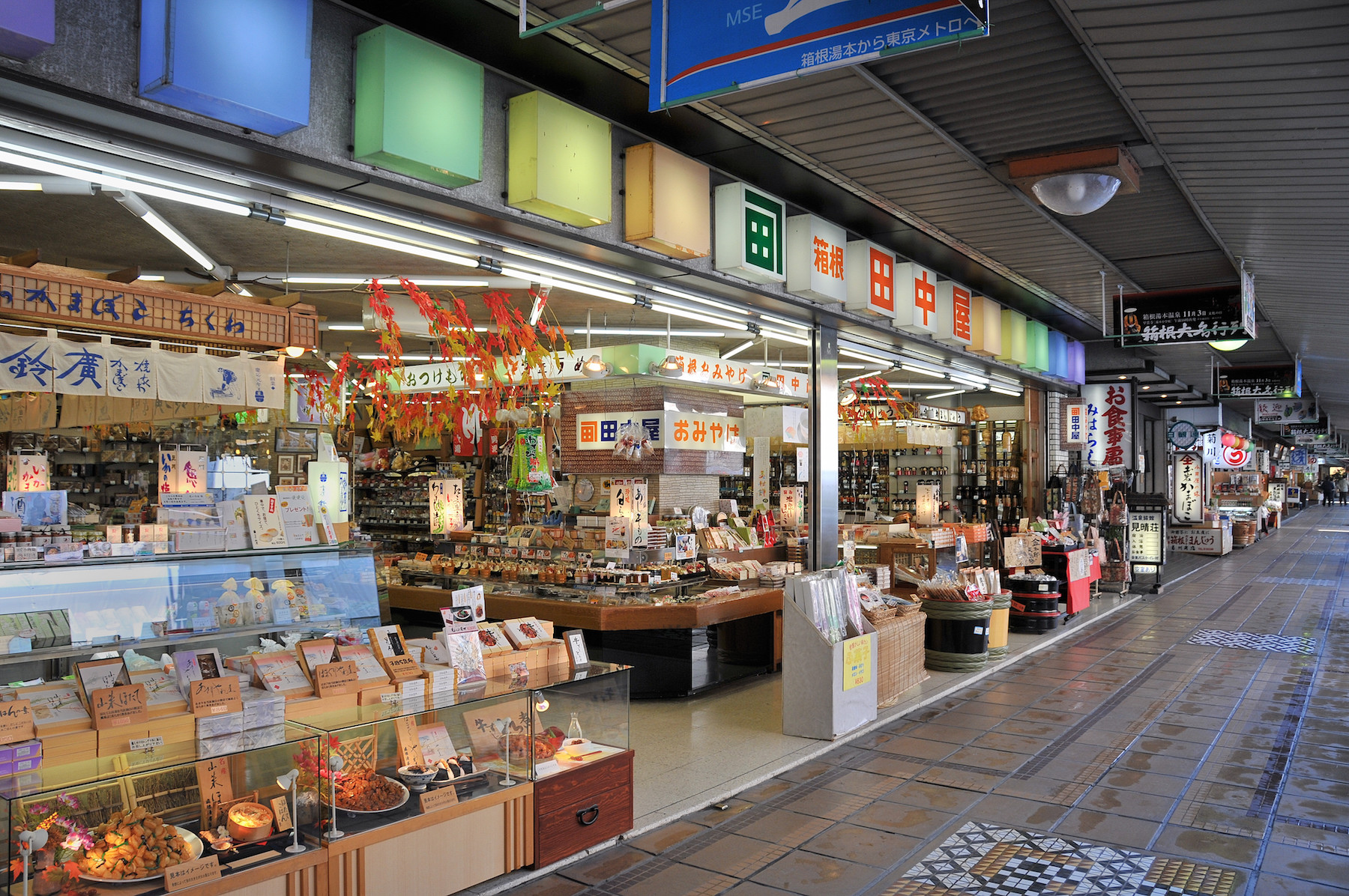
Hakone-Yumoto is the oldest and most atmospheric entry point into the Hakone resort area — a compact onsen town built along the narrow gorge of the Hayakawa River where the first hot springs were discovered over 1,200 years ago and where the character of the town has been shaped by centuries of travellers arriving from the Tokaido highway to rest, bathe, and recover. The town sits at the base of the Hakone mountains at an elevation of just 96 metres, and the contrast between the valley floor — dense with ryokan, bathhouses, and the covered shopping street running from the station toward the river — and the steep forested walls of the gorge on either side gives it a sheltered, enclosed quality quite unlike the more open mountain terrain higher up. The Hayakawa River runs clear and fast through the centre of town, its banks lined with old willows, and the sound of the water is audible from most of the main street.
The covered shopping arcade between the station and the river is one of the finest examples of a resort shotengai in the Kanto region — a dense 400-metre run of shops selling Hakone's signature crafts: Yosegi-zaiku (marquetry woodwork using multiple wood types in interlocking geometric patterns, a technique developed in this valley in the Edo period and still produced by craftsmen using the same tools), locally made kamaboko fish cakes, and the range of onsen-related products that have been sold to travellers passing through since the highway era. Several of the traditional sweet shops on the street have been operating since the Meiji period. Terry uses Yumoto as the orientation point for the whole day — explaining the geography of the caldera, the Hakone loop itinerary, and what each stop will offer before the mountain railway departs.

Gora is the upper terminal of the Hakone Tozan Railway and the junction point where the mountain railway ends and the cable car (funicular) begins the next stage of ascent toward the Owakudani ropeway. Sitting at 541 metres above sea level in a broad mountain hollow, it has a completely different character from Yumoto at the valley bottom — cooler, quieter, and oriented around the serious leisure infrastructure that Hakone has developed over more than a century as a resort for Tokyo's wealthy residents. The Hakone Open Air Museum, a five-minute walk from Gora station, is one of the finest sculpture parks in Japan: a hillside setting containing over 120 works by major 20th-century sculptors — Henry Moore, Rodin, Miro, Calder, Giacometti — displayed in gardens designed to frame each work against the surrounding mountain landscape. The Picasso Pavilion alone contains over 300 works across all media.
Beyond the museum, Gora has a particular character that rewards slower exploration: the Gora Park immediately above the station is a formal French-style garden built on the hillside in 1914, with seasonal plantings, a rose garden at its peak in May and October, and greenhouses containing tropical plants maintained since the Taisho era. The town's small main street has a handful of excellent coffee shops and bakeries serving the mountain resort clientele — the quality of the bread and pastry in Gora is disproportionately high for a town of its size, reflecting decades of serving guests from Tokyo's most discerning households. Terry uses Gora as the transition point between the valley entrance and the high-altitude volcanic landscape above — a place to take stock, have good coffee, and prepare for the drama of the ropeway crossing over Owakudani that follows.
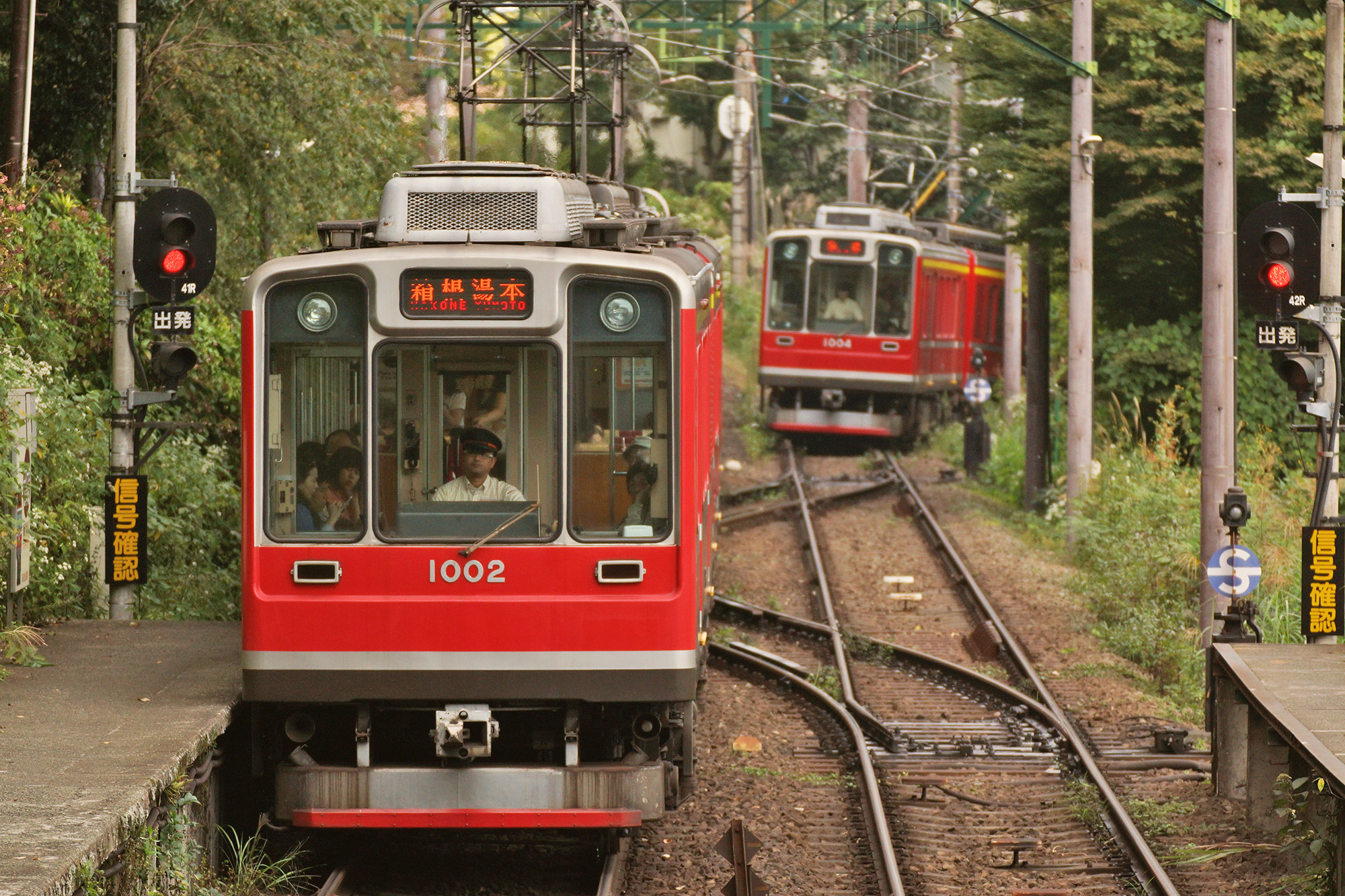
The Hakone Tozan Railway is Japan's oldest mountain railway, opened in 1919, and the only dedicated mountain line in the country capable of handling the gradient between Odawara and Gora — a climb of nearly 400 metres over 15 kilometres of track that defeated conventional rail engineering and required the switchback system that remains its defining characteristic. The train ascends through three switchback points where it stops, reverses direction, and climbs again at a new angle, the driver and conductor swapping ends at each reversal in a choreography that has been performed on the same line for over a century. The surrounding forest changes with the season in ways that are reliably spectacular: the hydrangea that line the embankments through June turn the whole route into a corridor of blue, purple, and white, and the deciduous canopy that crowds the track through summer shifts to deep amber and red from late October into November.
The engineering of the line is worth understanding before you board: the maximum gradient of 80 per mille — a rise of 80 metres for every kilometre of track — sits at the absolute limit of adhesion railway capability, and the track layout required the removal of substantial hillside to create the switchback loops. The carriages are designed with their floors angled to compensate for the gradient, so passengers sit on a slight tilt relative to the hillside outside, and the windows on the valley side offer drops into forested gorges that make the engineering achievement more visible. Terry uses the journey to introduce Hakone's geography — the caldera structure of the volcano, the layers of history from feudal checkpoint to modern resort — before the day's walking and exploring begins.
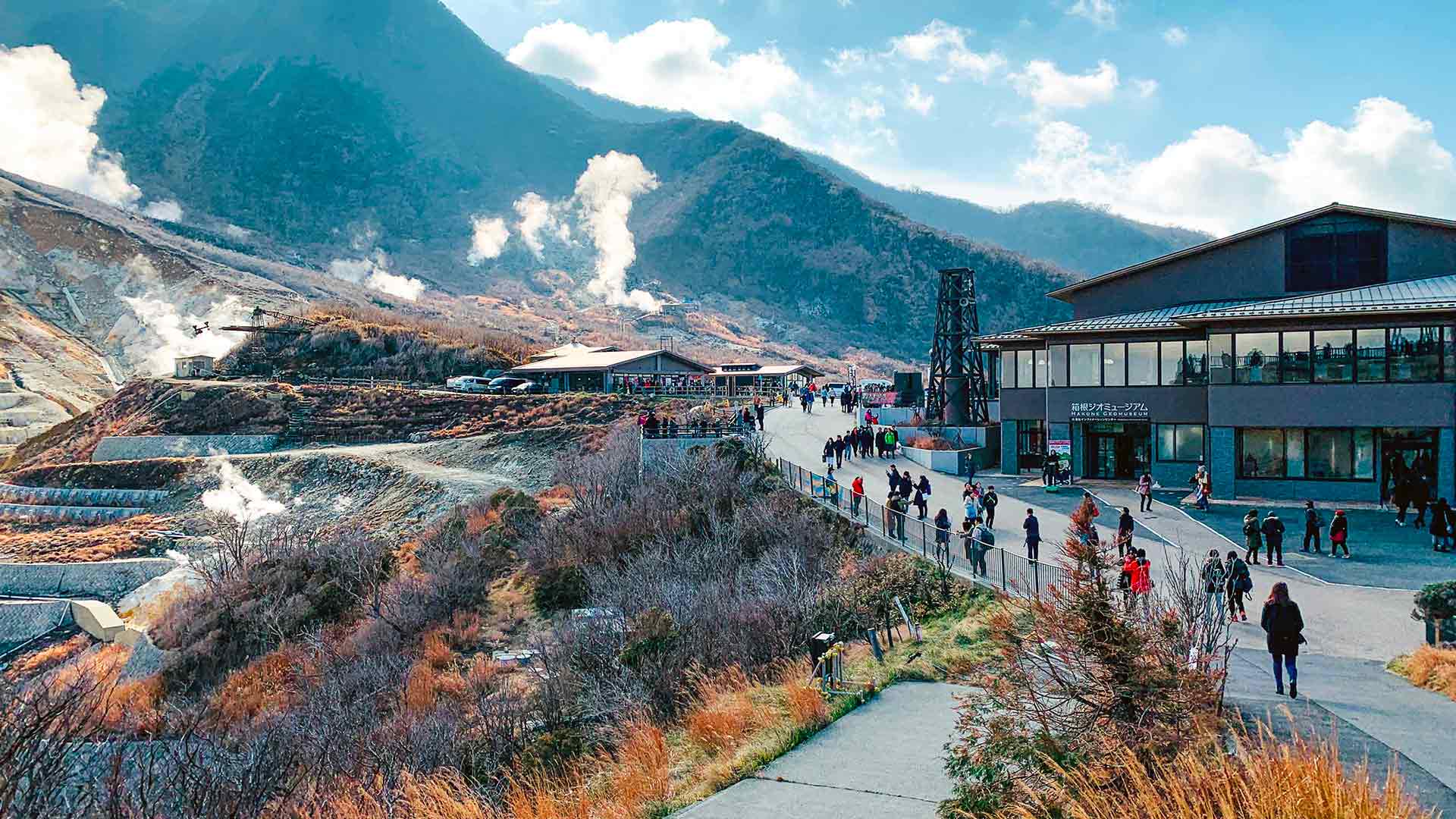
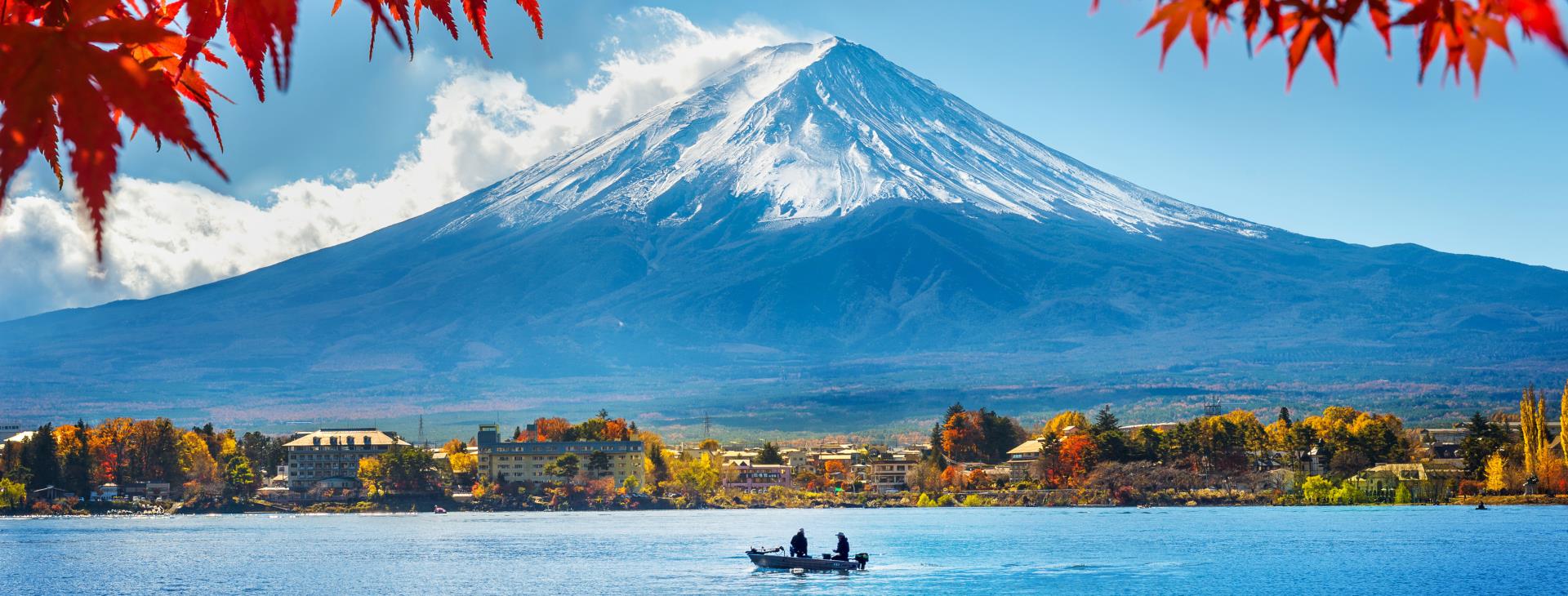
Owakudani — the Great Boiling Valley — is the most visibly active part of the Hakone volcanic system, a zone of geothermal vents, sulphurous fumaroles, and boiling mud pools created by the last major eruption of the caldera approximately 3,000 years ago. The Hakone Ropeway crosses directly above it, the gondola passing through air that carries the sharp, mineral smell of hydrogen sulphide, the ground below bleached pale yellow and white by sulphur deposits, steam rising in columns from dozens of separate vents in a landscape that looks entirely unlike anywhere else in the Kanto region. On clear days the gondola also frames an unobstructed view of Mount Fuji rising above the southern rim of the caldera — the most direct sightline to Fuji available from the Hakone loop — and the combination of active volcanic landscape in the foreground and the symmetrical cone of the dormant stratovolcano beyond it is one of the iconic views of the region.
The kuro-tamago — black eggs — sold at the Owakudani station are eggs boiled in the iron-rich hot spring water, a process that turns the shells black through a chemical reaction between the iron and hydrogen sulphide on the shell surface while leaving the inside a normal hard-boiled egg. The local tradition holding that eating one adds seven years to your life expectancy dates from the postwar period when the eggs became one of the defining souvenirs of Hakone tourism, and while the claim is not verifiable, the eggs have been boiled continuously in the same springs for decades. The Owakudani area has activity monitoring in place and access to the closest vent zones is occasionally restricted during periods of elevated sulphur output — Terry monitors conditions in advance and has alternative routes planned accordingly.
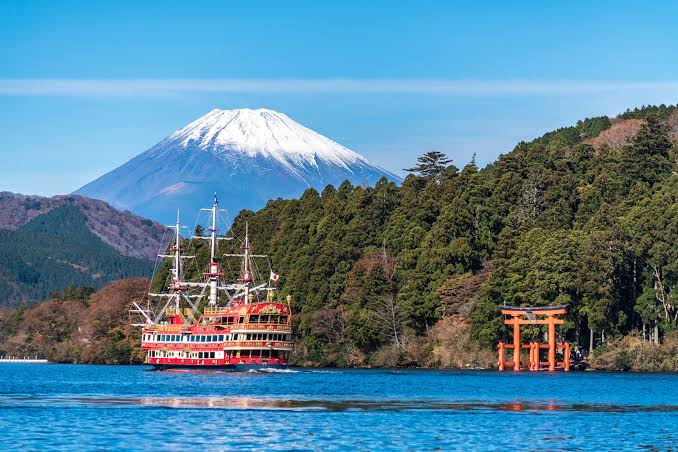
Lake Ashi — Ashinoko — occupies the southern section of the Hakone caldera, a crater lake formed approximately 3,000 years ago when volcanic activity dammed the valley and created a body of water roughly seven kilometres long and two kilometres wide at an elevation of 723 metres. The lake is exceptionally clear — fed by mountain springs rather than rivers carrying sediment — and on still days it mirrors the surrounding hills and, in the right conditions, the cone of Mount Fuji rising above the southern caldera rim with the kind of precision that makes the reflection appear more vivid than the original. The sightseeing vessels that cross it are designed to make the most of this geography: replica galleon-style boats with open upper decks that allow a full 360-degree view of the caldera walls, the lake surface, and the Fuji sightline on clear days.
The vermilion torii gate of Hakone Shrine standing in the shallows at Motohakone is one of the most photographed views in the Hakone area — the gate appears to float directly on the lake surface, its lacquered colour contrasting with the surrounding cedar forest and the grey water. The shrine itself dates from 757 AD and occupies forested hillside above the gate, approached through a cedar avenue that has been growing beside the lake for centuries. The cruise across the lake takes approximately thirty minutes from Togendai to Mototsuki, long enough to watch the caldera landscape pass slowly from open water to forested shore, and the arrival at the southern end positions the group for the Cedar Avenue walk that follows.
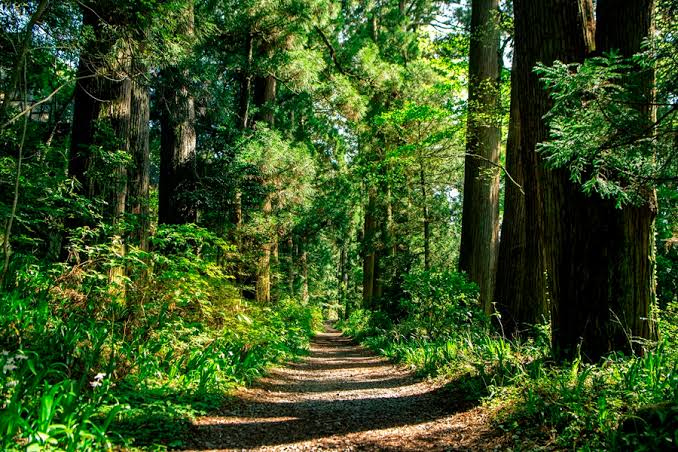
The Hakone Cedar Avenue — Suginami-ki — is one of the best-preserved sections of the old Tokaido highway, the road that connected Edo (modern Tokyo) to Kyoto and carried the political, commercial, and cultural traffic of Tokugawa Japan for over two and a half centuries. The avenue's cedar trees were planted in 1618 by order of the Tokugawa shogunate, partly to shade the travellers and daimyo processions that moved along the road and partly as a visible statement of the shogunate's control over the route — the Hakone checkpoint, one of the most strictly enforced barriers in the entire country, controlled access to Edo and sat at the heart of this section of the highway. The surviving cedars, now over 400 years old, have grown to heights of 20 to 30 metres, their trunks broad enough that two people cannot reach around them, forming a cathedral canopy over the original dirt track that runs for approximately one kilometre through this section.
Walking the avenue at the end of the Hakone loop gives the day a particular quality of transition — from the volcanic drama of Owakudani and the open water of Lake Ashi to the enclosed, meditative quiet of old-growth cedar forest and packed earth underfoot. The sound changes completely as you enter the avenue: the traffic of the modern road above drops away, the cedar canopy absorbs ambient noise, and the track is wide enough for only two or three people walking abreast, which gives it an intimacy quite different from any of the day's earlier stops. Terry walks the full surviving section and uses it to close out the day's history — the checkpoint culture, the sankin-kotai system that kept the daimyo moving along this road twice a year, and what the Tokaido meant for the period when Japan was arguably the most urbanised and literate society on earth.
* Terry's personal transit, admissions & meals are also included — no hidden costs on the day.
Hakone is nestled deep in the volcanic mountains — the comfortable Odakyu Romancecar express takes roughly 85 minutes each way from Shinjuku.
Everything is covered in your flat rate — the Hakone Freepass, museum admission, lunch, and snacks are all pre-arranged so there are no out-of-pocket costs on the day.
All tours are strictly private. Your group will have Terry's exclusive attention with zero rushing, zero strangers, and no rigid megaphone-led schedules.