Three Wise Monkeys carving on the Shinkyusha building at Nikko Tosho-gu Shrine
🥟 Gyoza Capital · 🏯 Shogun Shrines · 🌊 Alpine Waterfalls

Utsunomiya & Nikko

Two days north of Tokyo: begin in Japan's gyoza capital with its extraordinary underground cavern, then journey into the sacred mountain forests of Nikko — gold-leaf shrines, a haunting gorge of stone Jizo, and a waterfall that drops 97 metres into volcanic rock.

Gyoza Culture · Underground Caverns · Cliff Temples · Tokugawa Shrines · Sacred Gorge · Alpine Lakes

Most visitors go straight to Nikko — and miss half the story. Utsunomiya, the capital of Tochigi Prefecture sitting 50 minutes north of Tokyo on the Shinkansen, is a city with its own distinct character: Japan's undisputed gyoza capital, home to over 300 dumpling restaurants, an extraordinary 20,000 square-metre underground stone quarry that now functions as a museum, and a Buddhist temple built directly into a cliff face. Staying overnight here then taking the local train into Nikko the following morning gives you both destinations at the right pace — and Nikko, with its Toshogu Shrine, the atmospheric Kanmangafuchi Abyss, and the alpine scenery of Lake Chuzenji and Kegon Falls, is a place that genuinely rewards the extra time.

Major HubNikko Station · JR Nikko Line from Utsunomiya
Tour PaceActive · ~10,000 Steps · Uphill Temple Paths
Transit TipJR Pass valid · Tobu Nikko Line from Asakusa cheaper
Best TimingFull Day · Early Shinkansen to Utsunomiya
Vibe ExpansionCombines naturally with Kinugawa Onsen overnight
Highlights
Day One · Utsunomiya — Gyoza, Stone & Ancient Shrines
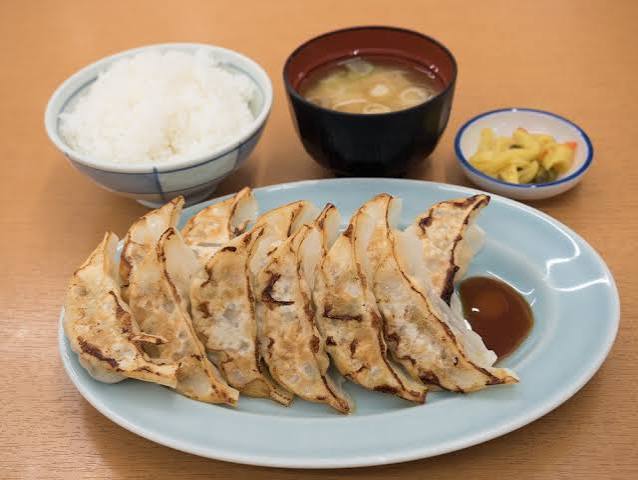
Plates of Utsunomiya's famous pan-fried gyoza dumplings, Japan's gyoza capital
Stop 01 · Culinary Culture — Arrival · Late Morning
Japan's Gyoza Capital · Over 300 Restaurants

Utsunomiya Gyoza

宇都宮餃子
📍 View on Google Maps ↗

Utsunomiya's relationship with gyoza is not a marketing gimmick — it is a genuine culinary tradition rooted in the city's postwar history, when soldiers returning from Manchuria brought back the dumpling-making techniques they had learned in northern China and adapted them to local tastes and ingredients. The city now claims over 300 gyoza restaurants, and per-capita gyoza consumption here consistently ranks among the highest of any city in Japan — a title Utsunomiya contests fiercely with Hamamatsu in Shizuoka. The Utsunomiya style emphasises a thinner, crisper wrapper than many regional variations, pan-fried to a golden base with steam-finished tops, typically served with a dipping sauce of rice vinegar and chilli oil rather than the soy-heavy versions common elsewhere.

The best approach is a small-group crawl through the restaurants concentrated around the central station area and the dedicated Gyoza Street (Gyoza Dori) — ordering two or three pieces at each stop and comparing the variations in filling, wrapper thickness, cooking method, and sauce between establishments. Some restaurants fill their gyoza with pork and cabbage in the classic style; others use leek-heavy fillings, cheese, kimchi, seafood, or vegetables with yuzu. The ritual of moving between restaurants, standing at counters or squeezing into small dining rooms, eating hot dumplings straight from the pan while the next batch sizzles — is one of those quintessentially Japanese food experiences that doesn't exist at the same intensity anywhere else.

💡 Terry knows which restaurants are worth the queue and which are tourist-facing — the best gyoza in Utsunomiya are typically eaten at small counters with no English menu and a handwritten price list. Budget ¥1,500–2,500 for a thorough crawl across four or five establishments. Lunch hour (11:30 AM–1:00 PM) is when the restaurants are at their most active.
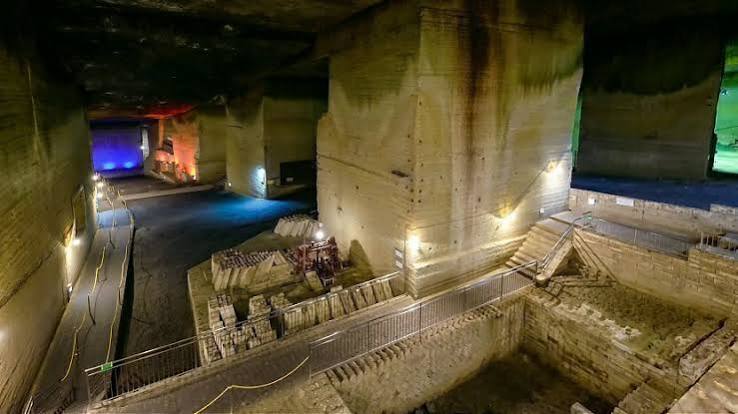
A vast underground stone cavern at the Oya History Museum in Utsunomiya
Stop 02 · Underground World — Early Afternoon
20,000m² Stone Cavern · Former Quarry · Film Location

Oya History Museum

大谷資料館
📍 View on Google Maps ↗

The Oya History Museum is one of those places that consistently surprises visitors who weren't expecting much — a former stone quarry on the outskirts of Utsunomiya whose underground chambers, carved entirely by hand over more than three centuries, cover 20,000 square metres and descend 30 metres below street level. Oya stone (oyaishi) is a soft volcanic tuff that has been quarried in this area since at least the Edo period, prized for its workability, thermal insulation, and the pleasing pale green-grey colour it develops on weathering. It was used to build everything from traditional storehouses and garden walls to major modern structures including the former Imperial Hotel in Tokyo (designed by Frank Lloyd Wright, who specified Oya stone for its earthquake-resistant properties).

The cavern itself is extraordinary to stand inside: the cathedral-scale void, with its rough-hewn walls showing the marks of hand tools used by generations of quarrymen, has an atmosphere closer to an ancient Roman ruin than a modern museum. The temperature stays at a constant 8°C regardless of season — bring a layer even in summer. The exhibits document the quarrying history and the lives of the workers with genuine depth, and the space has become a sought-after film location and event venue: the combination of its vast scale, the greenish stone walls, and the quality of the light filtering through the access tunnels has made it one of the most photographed interior spaces in Japan.

💡 Entry is ¥800 and the museum is about 15–20 minutes by bus from central Utsunomiya. It is consistently cold underground regardless of outside temperature — a light jacket or layer is essential even in July. Allow 60–90 minutes. Terry can combine the museum visit with the nearby Oya-ji Temple in a single afternoon loop.
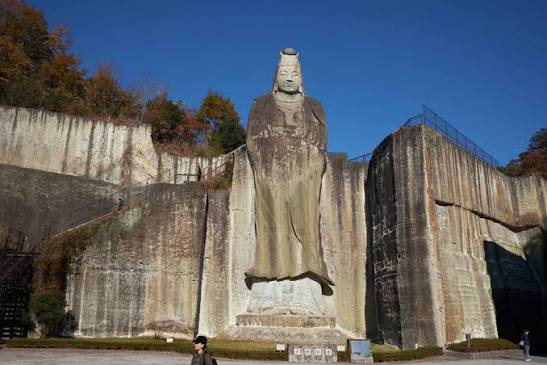
Buddhist statues carved directly into the cliff face at Oya-ji Temple in Utsunomiya
Stop 03 · Cliff-Face Temple — Mid Afternoon
Japan's Oldest Stone Carving · Founded 810 AD

Oya-ji Temple

大谷寺
📍 View on Google Maps ↗

A short distance from the Oya History Museum, built directly into a towering face of Oya stone, Oya-ji is one of the most unusual Buddhist temples in Japan. The main hall has been constructed within a natural cave in the cliff, sheltering a set of Buddhist relief carvings cut into the rock face that are believed to be the oldest stone carvings in Japan — dated to the early Heian period, around 810 AD, and attributed by tradition to the monk Kobo Daishi, though the stylistic evidence suggests they predate his era considerably. The central carving, a standing Senju Kannon (Thousand-Armed Kannon) approximately four metres high, was recognised as a National Treasure in 2018.

The approach to the temple through the Oya stone landscape — great rounded boulders of the pale volcanic rock, worn by centuries of weather into organic shapes — has a quality of quietness and ancientness that is striking even by the standards of Japanese temple sites. The combination of the stone carvings, the cave architecture, the garden behind the main hall, and the giant white Heiwa Kannon statue visible on the hillside above (a 26-metre figure erected in 1954 as a memorial to those who died in the Second World War) makes this one of the more layered and contemplative stops in the Utsunomiya area — very different in character from the underground cavern, despite being made from the same stone.

💡 Entry is ¥500. The peace Kannon statue at the top of the hill is a 15-minute climb but gives panoramic views over the Oya stone landscape and the surrounding agricultural plain. Late afternoon light on the pale stone walls is particularly good for photography.
The centuries-old shrine buildings of Futaarayama Shrine in Utsunomiya
Stop 04 · City Shrine — Late Afternoon
1,600-Year-Old Shrine · Heart of the City

Futaarayama Shrine

二荒山神社(宇都宮)
📍 View on Google Maps ↗

Utsunomiya's oldest and most important shrine sits on Shiroyama Hill at the centre of the city, overlooking the surrounding plain from the same hilltop that has been considered sacred for over 1,600 years. The shrine is dedicated to Toyoki-Irihiko-no-Mikoto, the legendary founder of the Utsunomiya region, and it gives the city its name — "Utsu no Miya" meaning "hollow shrine" or, in another reading, "the palace of Utsu". The main shrine buildings were rebuilt in the Edo period and occupy a forested hilltop compound of stone lanterns, ancient trees, and the particular quiet that characterises a shrine that has been continuously used for religious purposes for sixteen centuries.

The shrine is the spiritual anchor of virtually every major festival in Utsunomiya — the large-scale Utsunomiya Summer Festival in August, the famous autumn mikoshi (portable shrine) processions, and the New Year crowds that make this the busiest gathering point in the city on the first days of January. Visiting on an ordinary weekday afternoon, when the compound is largely quiet, gives you access to the main hall and the forested grounds without the crowds, and the view from the hilltop over the city towards the Nikko mountains on a clear day is one of the better elevated perspectives in Tochigi Prefecture. The castle ruins that originally stood on this same hill — the Utsunomiya Castle — are visible just below the shrine.

💡 Entry to the shrine grounds is free. The hilltop location means it catches the late afternoon light well — combine with the adjacent Castle Ruins Park, which is directly below on the same hill, for an efficient end to the afternoon before returning to the station area for dinner.
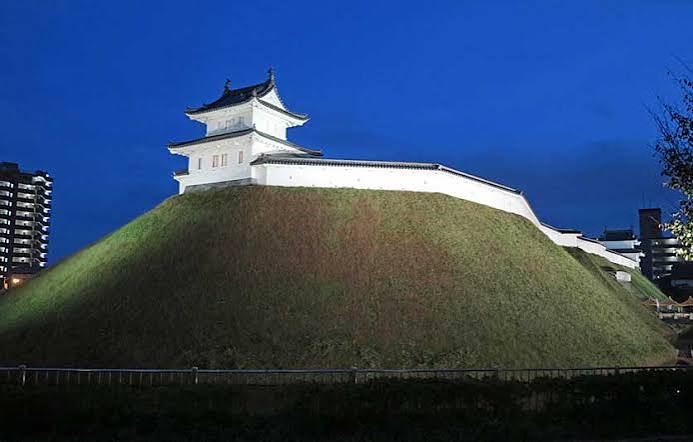
The reconstructed turret and earthen walls of Utsunomiya Castle Ruins Park
Stop 05 · Historic Park — Evening · Gyoza Dinner
Reconstructed Castle Turret · City Views · Gyoza Festival Venue

Utsunomiya Castle Ruins

宇都宮城址公園
📍 View on Google Maps ↗

Utsunomiya Castle — originally known as Kamegaoka Castle — was the seat of the Utsunomiya clan and later a key strategic stronghold in the Kanto region throughout the Sengoku and Edo periods. The castle was destroyed during the Boshin War of 1868, the conflict between pro-Imperial and pro-Shogunate forces that brought the Meiji Restoration, and only the earthworks and moat remained for most of the 20th century. In 2007, two of the castle's turrets and a section of the mud-plastered earthen walls were carefully reconstructed using historical records, giving the park a visible focal point and providing a small museum within the turrets documenting the castle's history and the Boshin War battles that were fought in the streets of Utsunomiya.

The park occupies the central portion of what was once a substantial castle complex, and the surviving earthen ramparts — unusually large and well-preserved for a Japanese castle site — give a clear impression of the original fortification's scale. The park is used year-round by Utsunomiya residents for festivals, outdoor events, and everyday recreation, and it hosts the annual Gyoza Festival in November when member restaurants of the Utsunomiya Gyoza Association set up stalls on the castle grounds. From the reconstructed turrets, the view of Mount Nantai — the sacred volcano that stands above Nikko — on a clear day previews the following day's destination in the most literal way possible.

💡 Entry to the park is free; the museum inside the turrets charges a small fee. This is a natural end point for the Utsunomiya day before returning to the station area for an evening gyoza dinner — Terry's recommended close to Day 1 is a longer sit-down meal at one of the established gyoza restaurants near the station, comparing cooking styles from the afternoon's standing-counter crawl.
Day Two
Nikko — Sacred Forests, Gold-Leaf Shrines & Alpine Falls
45 min from Utsunomiya by Tobu Nikko Line or JR Nikko Line · UNESCO World Heritage Site
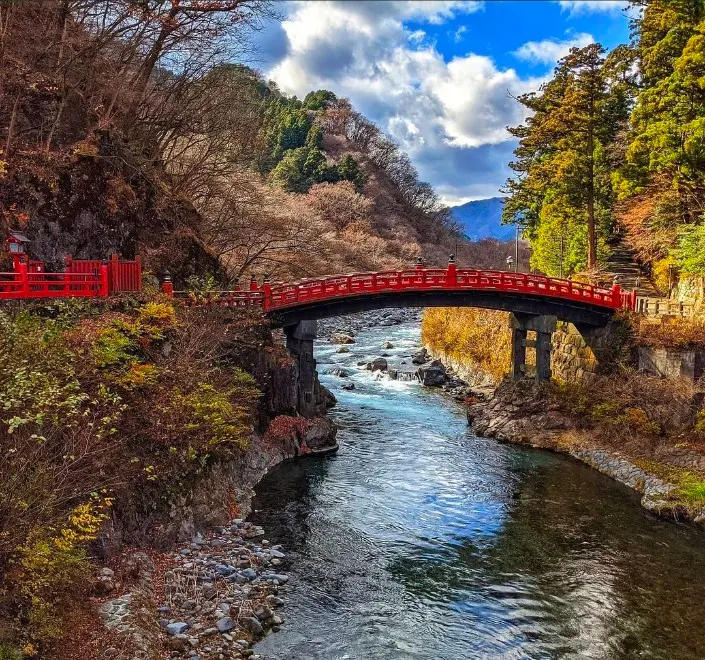
The red lacquered Shinkyo Sacred Bridge arching over the river in Nikko
Stop 06 · Sacred Gateway — Morning · 9:30 AM
UNESCO World Heritage · Gateway to Nikko's Sacred Zone

Shinkyo Bridge

神橋
📍 View on Google Maps ↗

The Shinkyo — Sacred Bridge — spans the Daiya River at the entrance to Nikko's shrine and temple complex, and it marks one of the most photographed moments of arrival in Japan: the brilliant vermilion lacquer of the bridge arch against the dark cedar forest, the river tumbling over mossy boulders below, and the mountain path rising ahead towards the shrines. The bridge is not merely decorative — it is part of the UNESCO World Heritage designation that covers Nikko's shrine and temple complex, and it carries a meaning rooted in the foundation mythology of the site: according to tradition, the monk Shodo Shonin, who established the first sacred buildings in Nikko in 766 AD, was blocked from crossing the Daiya River until the deity Jinja Daioh appeared and caused two sacred serpents to form a bridge of their bodies for him to cross.

The current bridge dates from 1636 — the same year as Toshogu Shrine — though it has been rebuilt multiple times following flood damage, most recently in 1907 after a severe flood destroyed the previous structure. It was historically reserved exclusively for Imperial messengers and the Shogun himself; ordinary visitors used a separate crossing and could only observe it from a distance. Today visitors can walk across the bridge for a small fee, and Terry's recommended approach is to spend time at the bridge before the main temple complex — the light on the river and the cedar forest is at its best in the morning, and the short walk from Nikko Station to the bridge passes through the older parts of the town with its traditional shops and the long cedar avenue that gives this approach to Nikko some of its particular character.

💡 Entry to walk the bridge is ¥300. The best photographs are taken from the riverbank below rather than from the bridge itself — the full arch and the surrounding forest frame beautifully from the water's edge. The bridge is at its most atmospheric in early morning mist and at peak autumn colour in late October.
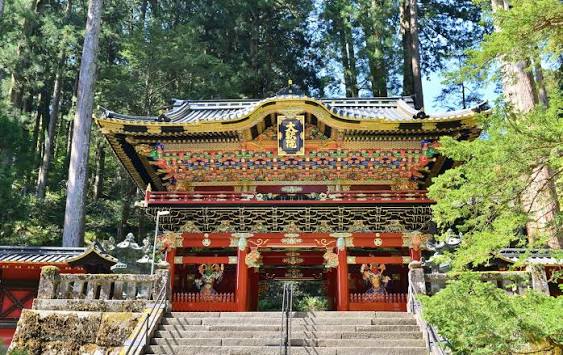
The ornate temple halls of Rinno-ji and the Taiyuin Mausoleum in Nikko
Stop 07 · Buddhist Temple Complex — Morning · 10:15 AM
1,200 Years of Buddhist History · Iemitsu's Mausoleum

Rinno-ji Temple & Taiyuin

輪王寺 · 大猷院
📍 View on Google Maps ↗

Rinno-ji is the major Buddhist temple in Nikko and the first significant structure encountered after the Shinkyo Bridge — a complex of multiple buildings spread across the wooded hillside, the most important of which is the Sanbutsudo (Three Buddha Hall), an enormous wooden structure housing three gilded Buddha statues each standing approximately eight metres high. The statues represent Amida Nyorai, Senju Kannon (the Thousand-Armed Kannon), and Bato Kannon (the Horse-Headed Kannon), and correspond to the three sacred mountains of the Nikko range — Nantai, Nyoho, and Taro. Rinno-ji was founded in 766 AD by the monk Shodo Shonin and has been the religious centre of Nikko ever since, accumulating over twelve centuries of artistic and architectural heritage that the Sanbutsudo only partly represents.

A short walk from the main Rinno-ji buildings through the cedar forest brings you to Taiyuin — the mausoleum of Tokugawa Iemitsu, the third Tokugawa Shogun and the grandson of Ieyasu whose own mausoleum at Toshogu stands nearby. Iemitsu requested that his own tomb be positioned facing Toshogu so that he would always be in the presence of his grandfather, and Taiyuin was built in 1653 to a specification that was deliberately made slightly less elaborate than Toshogu out of respect for the founder. The result is still extraordinarily ornate — a sequence of decorated gates, stone lanterns, and carved halls climbing the hillside through stands of ancient cedar — but with an atmosphere of forested quietness that Toshogu, which attracts far larger crowds, often lacks.

💡 Rinno-ji Sanbutsudo entry ¥400; Taiyuin ¥550. Many visitors skip Taiyuin in favour of spending more time at Toshogu, but Terry's view is that Taiyuin — particularly in the late morning when the light filters through the cedar canopy onto the decorated gates — is one of the finest individual structures in Nikko, and the smaller crowds make it easier to appreciate the craftsmanship.
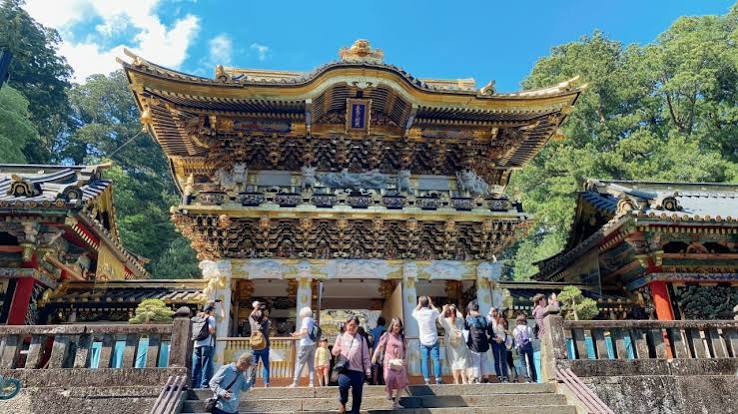
The gold-leafed carvings of the Yomeimon Gate at Toshogu Shrine in Nikko
Stop 08 · UNESCO World Heritage — Late Morning · 11:30 AM
Tokugawa Ieyasu's Mausoleum · 2.5 Million Sheets of Gold Leaf

Toshogu Shrine

日光東照宮
📍 View on Google Maps ↗

Nikko Toshogu is the mausoleum of Tokugawa Ieyasu — the warlord who unified Japan after a century of civil war and founded the Tokugawa Shogunate that would govern the country for 260 years — and it was built in 1617 with the explicit intention of being nothing less than a permanent, physical declaration of Tokugawa power, legitimacy, and divine status. Where virtually every other Japanese shrine and temple tradition emphasises restraint, natural materials, and the beauty of simplicity, Toshogu does the precise opposite. Every surface is carved, gilded, lacquered, or painted, with an estimated 2.5 million sheets of gold leaf covering the buildings and over 5,000 individual carved panels throughout the complex, each depicting animals, mythological creatures, flowers, and symbolic scenes with a density and skill that rewards close examination for far longer than most visitors allow themselves.

The most celebrated individual carvings — the Three Wise Monkeys (see no evil, hear no evil, speak no evil) on the stable building, and the Sleeping Cat (Nemuri Neko) above the entrance to the inner sanctum — have achieved worldwide recognition far beyond their physical size. The Sleeping Cat in particular, a small panel showing a drowsing cat with peonies behind it, is attributed to the master carver Hidari Jingoro and carries a layered symbolic meaning: a cat asleep means no mice are about, and no mice means no birds to catch mice, so all creatures live in peace. The walk beyond the Sleeping Cat, up 207 stone steps through ancient cryptomeria trees to Ieyasu's actual tomb, is far quieter than the lower complex and passes through a grove of trees that were already old when the shrine was built.

💡 Entry ¥1,600. Terry's approach is to spend the first 45 minutes in the lower complex examining the carvings carefully before the midday crowds arrive, then climb to the tomb when foot traffic thins. The Yomeimon Gate — also called the Higurashi Gate, "the gate you could gaze at until sunset" — deserves at least 20 minutes of close examination; virtually every panel contains a hidden detail or visual pun.
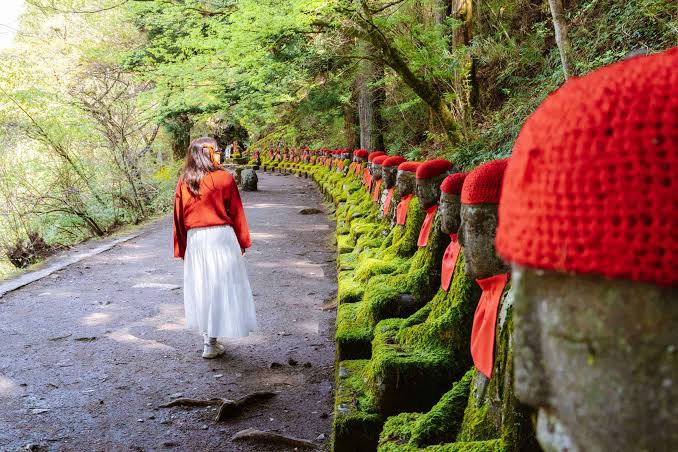
A row of stone Jizo statues lining the Kanmangafuchi Abyss gorge in Nikko
Stop 09 · Hidden Nikko — Early Afternoon · 14:00
Row of 70 Stone Jizo · Volcanic Gorge · Almost No Crowds

Kanmangafuchi Abyss

憾満ヶ淵
📍 View on Google Maps ↗

Kanmangafuchi is one of those places that most visitors to Nikko never find — a natural gorge carved by a lava flow from Mount Nantai along the Daiya River, a 20-minute walk from the main shrine complex through a quiet residential neighbourhood, where nearly 70 stone Jizo statues stand in a row along the moss-covered riverbank path. The Jizo figures — small, robed bodhisattvas who are the protectors of children, travellers, and those in difficult circumstances — were placed here over centuries and have been worn by weather into subtly different expressions and postures, giving the row a haunting quality that has nothing to do with tourist infrastructure and everything to do with accumulated time and devotion.

The gorge itself was created by a lava flow from Mount Nantai approximately 20,000 years ago, and the volcanic basalt walls of the canyon give the Daiya River a dark, dramatic setting quite different from the manicured grounds of the shrine complex above. The path along the riverbank is unpaved and mossy, the cedar trees are enormous and old, and the sound of the river running fast through the lava rocks is constant. It is, by a considerable margin, the least crowded significant site in Nikko — even on busy weekends, the walk from the shrine area tends to filter out most of the tour group visitors — and the combination of the Jizo statues, the gorge, the river, and the forest gives it a contemplative quality that provides genuine contrast to the visual intensity of Toshogu.

💡 Entry is free. The path is approximately 500 metres each way along the river and takes about 30 minutes to walk at a comfortable pace. The Jizo figures are also nicknamed "Bake Jizo" (ghost Jizo) — according to local tradition, the number of statues changes each time they are counted, and no two counts produce the same total. Terry has his own view on this.
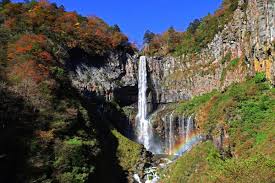
Kegon Falls plunging 97 metres near Lake Chuzenji in Nikko
Stop 10 · Alpine Splendour — Afternoon · 15:00
Japan's Most Famous Waterfall · Volcanic Highland Lake

Lake Chuzenji & Kegon Falls

中禅寺湖 · 華厳の滝
📍 View on Google Maps ↗

The road from Nikko town into Okunikko climbs 440 metres in just a few kilometres via the Irohazaka — a pair of one-way switchback roads, ascending and descending, each named after successive characters of the old Japanese hiragana alphabet for their hairpin turns. The ascent itself is part of the experience: the views back down over the valley deepen with each curve, and in autumn the slopes on both sides of the road turn brilliant red, orange, and gold in what is regularly rated among the best autumn foliage displays in Japan. At the top, Lake Chuzenji spreads out at over 1,200 metres above sea level — Japan's highest-altitude lake of its size, formed around 20,000 years ago when Mount Nantai's lava flows dammed the valley and created a deep volcanic basin. The lake's surface reflects the forested peaks surrounding it, and the former summer villas of foreign diplomats — who discovered Chuzenji as a cool escape from Tokyo's summer heat in the Meiji era — can still be seen along the northern shore.

The lake drains at its eastern edge as Kegon Falls, where the full outflow of Lake Chuzenji drops 97 metres in a single sheer plunge over volcanic basalt — one of Japan's three great waterfalls and, in its combination of volume, height, and setting, arguably the most dramatic. The main observation deck gives a clear view of the falls and the subsidiary cascades that flank it; an elevator descends 100 metres to a lower observation chamber cut into the rock at the base of the falls, where the roar of the water and the constant fine spray create an entirely different sensory experience from the view above. In winter the falls freeze partially, creating a spectacular ice formation that draws visitors from across Japan.

💡 The elevator to the lower observation deck costs ¥570 and is worth every yen — the scale of the falls is impossible to fully appreciate from the upper deck. The bus from Nikko town to Kegon Falls takes approximately 40 minutes. In autumn (mid-October), arriving at the lake by 3:00 PM gives good late-afternoon light on the falls and the return journey down Irohazaka in autumn colour before dusk.

2-Day All-Inclusive Rates

One flat price covers both days — Terry's guiding, all trains and mountain buses, all entry tickets across 10 distinct stops, Utsunomiya gyoza crawl, and Nikko yuba lunch. Terry handles every ticket and bill so you never reach for your wallet.

Solo

1 Guest
¥148,000 total
2 full days all-inclusive
All trains, admissions & meals included

Couple

2 Guests
¥166,000 total
¥83,000 per person
All trains, admissions & meals included

Small Group

3 — 4 Guests
¥194,000 total
From ¥48,500 per person
All trains, admissions & meals included

Group

5 — 6 Guests
¥222,000 total
From ¥37,000 per person
All trains, admissions & meals included

What's included in your 2-day flat rate

  • 2 full days of private guiding & shogunate commentary
  • All round-trip trains Tokyo↔Utsunomiya↔Nikko
  • All Nikko mountain bus passes
  • Oya Stone Museum & Oya-ji Temple (¥1,300)
  • Shinkyo Bridge entry (¥300)
  • Rinno-ji, Taiyuin & Toshogu combo (¥2,550)
  • Kegon Falls lower deck elevator (¥570)
  • Day 1: Utsunomiya gyoza multi-stop food crawl
  • Day 2: Traditional Nikko yuba lunch
  • Terry's personal transit, hotel & admissions included

* Guest hotel in Utsunomiya booked independently — Terry provides a shortlist of recommended hotels near the station.

* The Oya cavern stays at 8°C year-round — bring a light jacket regardless of season.

Getting There — Transport Guide for Guests

Transport costs are not included in the guiding fee and are paid directly by guests on the day. Below is a clear breakdown of the main options so you can plan your budget in advance.

Tokyo → Utsunomiya (Day 1)
Shinkansen (Yamabiko / Nasuno)
Tokyo or Ueno → Utsunomiya · approx. 50 min · ~¥4,000–4,500 non-reserved
Utsunomiya → Nikko (Day 2)
Tobu Nikko Line or JR Nikko Line
Tobu-Utsunomiya or JR Utsunomiya → Nikko · approx. 45 min · ~¥780–800 each way
Nikko Town → Chuzenji/Kegon
Tobu Bus (Chuzenji Onsen line)
Tobu-Nikko Station → Kegon Falls · approx. 40 min · ~¥1,100 each way
Nikko → Tokyo (Return)
Tobu Limited Express or JR + Shinkansen
Nikko → Utsunomiya → Tokyo · approx. 90–120 min total · ~¥2,500–5,000

Terry will coordinate all connections on the day and ensure you're on the right platforms at the right times. The Nikko All Area Pass (Tobu Railway) covers unlimited travel on Tobu lines from Tokyo to Nikko and all local buses within the Nikko area for 2–4 days and is worth considering for guests travelling from Asakusa. Ask Terry about the best pass option for your specific itinerary when booking.

What's Included
  • 2 full days of private guiding & shogunate historical commentary with Terry
  • All round-trip trains and mountain buses — no tickets to buy on the day
  • All 10 entry tickets including Oya Caverns, Toshogu Shrine combo & Kegon Falls elevator
  • Day 1: Utsunomiya gyoza multi-stop food crawl lunch
  • Day 2: Traditional Nikko yuba (tofu skin) lunch
  • Terry's personal transit, hotel stay, and admissions — all covered
Good to Know

Everything is covered in your flat rate — no out-of-pocket expenses on the day. Terry pays every train ticket, entry fee, and restaurant bill quietly in the background.

Guest hotel accommodation in Utsunomiya is booked independently. Terry provides a recommended shortlist of hotels close to the station. Utsunomiya has excellent business hotels at reasonable prices.

Comfortable walking shoes essential — Toshogu, Taiyuin, and the gorge walk involve uneven stone paths and steps. The Oya cavern stays at 8°C year-round — bring a light jacket regardless of season.

Autumn (mid-October to mid-November) is peak season — Nikko's foliage is among Japan's finest. Advance hotel booking strongly recommended.

Why Utsunomiya Changes the Trip

Nikko alone is a magnificent day out — but it's a day almost every visitor to Japan considers, and the Toshogu Shrine complex can feel crowded by mid-morning. Adding Utsunomiya the day before completely changes the rhythm and scope of what you're doing.

Day 1 in Utsunomiya is genuinely local in a way that few tourist itineraries manage — a city that Japanese people visit for the food and the stone landscape, that sees very few international visitors, and that has a character quite distinct from Tokyo. The Oya History Museum in particular is one of those places that stops you in your tracks: the scale of the underground cavern, the silence, the cold, the quality of the light — it's unlike anything else within easy reach of the capital.

Then Day 2 in Nikko arrives with the right amount of time and the right starting point — early morning at the Shinkyo Bridge before the day-trippers arrive from Tokyo, the shrines at their quietest, and the afternoon bus up to Kegon Falls with the whole day still ahead. That is a very different experience from rushing off an early Shinkansen from Tokyo and trying to compress everything into six hours.

Ready to book Utsunomiya & Nikko?

Gyoza, underground caverns, gold-leaf shrines, and Japan's finest waterfall — two days done properly. Check Terry's availability to get started.