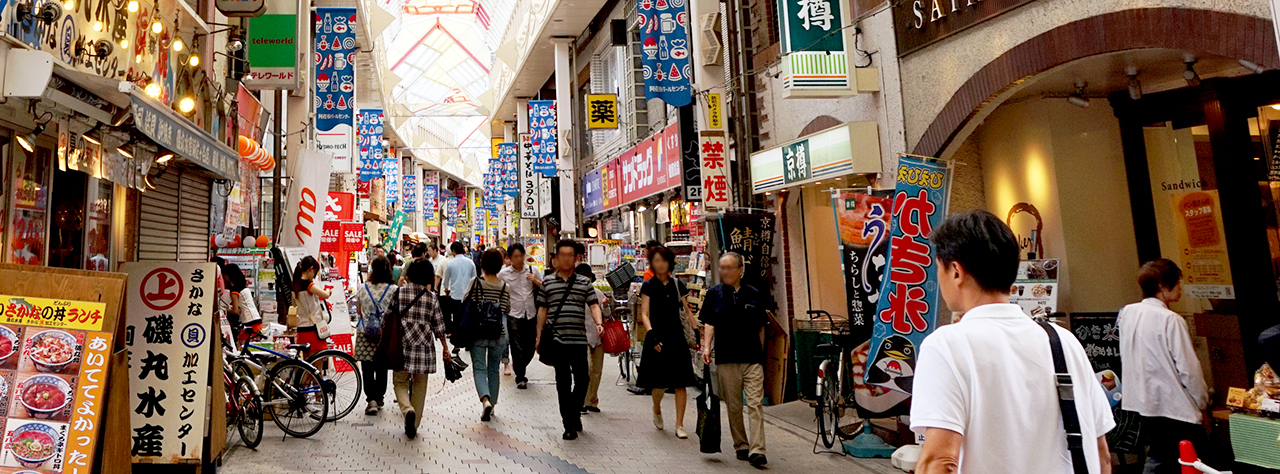
📍 Tokyo · Hidden Shopping Streets
Shotengai
Street food, covered arcades & the real neighbourhoods of Tokyo.
While visitors queue at Tsukiji and Shibuya, Tokyo's real food life plays out in its shotengai — covered shopping streets strung between train stations in ordinary residential neighbourhoods, where the butcher has been selling croquettes from the same spot for forty years, the tofu shop still makes its blocks by hand each morning, and yakitori smoke drifts out of tiny counters no wider than a hallway. These six streets are where Terry takes people who want to eat like a Tokyoite, not a tourist.
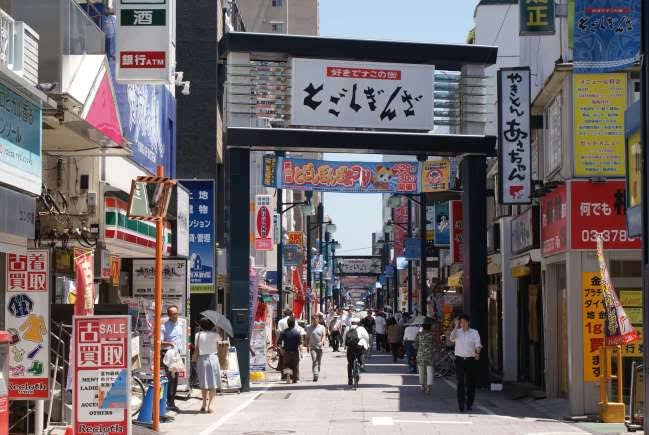
At 1.3 kilometres, Togoshi Ginza is the longest shotengai in Japan — a covered arcade of over 400 shops pressing through the residential backstreets of Shinagawa Ward without a single chain store or tourist concession in sight. The street took its name directly from the Ginza district in 1923, when local merchants, seizing an opportunity after the Great Kanto Earthquake, bought leftover granite paving stones from the Ginza road-widening project and relaid them here. The name stuck, the ambition stayed local, and the street has been feeding the surrounding neighbourhood ever since.
Walking the full 1.3 kilometres is the only way to take it in properly. The eastern end near Togoshi-Koen station is quieter and older, with family-run fishmongers and greengrocers; by the time you reach the western end near Togoshi station the pace quickens, the yakitori smoke thickens, and the queues form outside the best butchers. Around 400 individual shops line the route — fresh tofu made on-site each morning, handmade senbei, second-hand kimono, and the croquette stalls that have been the street's signature snack for generations.
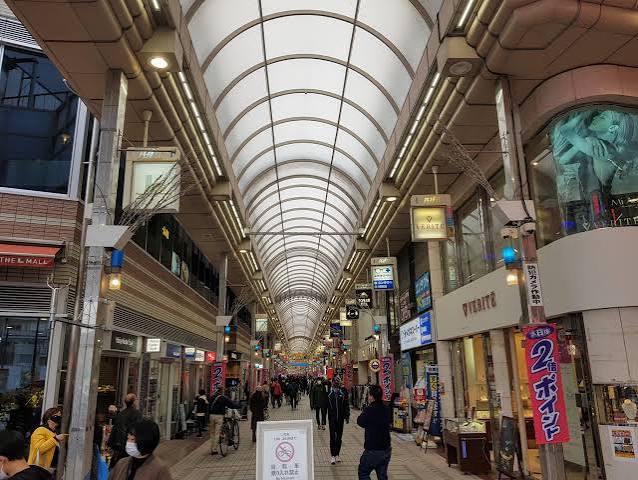
Musashi-Koyama's Palm shopping street is one of Tokyo's genuinely best-kept secrets — an 800-metre fully covered arcade with a retro Showa-era atmosphere that feels barely changed since the early 1970s, when the current roofing was added to a street that had already been trading for decades. Independent butchers, old-fashioned sweet shops, standing ramen counters, and family-run izakayas make up the backbone of the arcade, with almost no national chains visible anywhere along its length.
The area directly around the station has been transformed in recent years by a major underground shopping development built above a relocated section of the Tokyu Meguro Line tunnel. But Palm itself has resisted renovation with quiet determination. Its slightly peeling signage, hand-painted shopfront lettering, and the lingering smell of frying oil from the butchers give it a texture that's increasingly hard to find in a city that relentlessly rebuilds. The covered arcade connects to an outdoor extension leading into quieter residential backstreets where old wooden shophouses survive alongside community vegetable stalls.
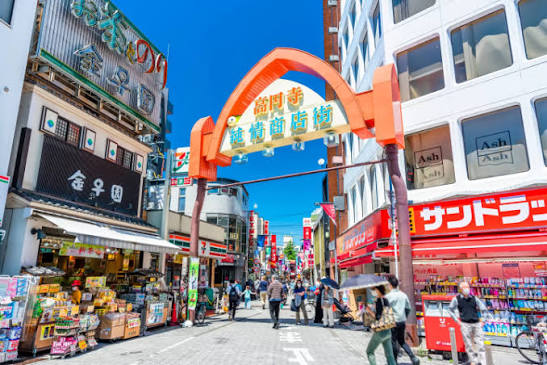
Koenji is Tokyo's most characterful shotengai neighbourhood — a bohemian tangle of covered arcades, back-alley drinking streets, vintage clothing markets, and independent food stalls that has been the city's counter-culture heartland since the early 1970s, when it became a gathering point for musicians, students, and activists priced out of more central areas. That energy has never fully dispersed. The shotengai network here is a web of covered passages — Pal Shopping Street, Look Shopping Street, and the narrower Sun Mall arcade — connecting into a surrounding warren of tiny bars, curry houses, record shops, live music venues, and second-hand bookstores.
The food on offer in Koenji reflects the neighbourhood's internationalist, low-budget character: Indian curry, falafel wraps, hand-pressed espresso, natural wine poured by the glass at standing counters, and standing sushi bars where the omakase costs less than a department store bento. The covered arcades are particularly good for casual grazing — takoyaki, yakitori on sticks, and grilled corn from mobile carts — while the surrounding streets reward wandering into unmarked doors. The area hosts the Koenji Awa Odori festival each August, one of the largest outdoor dance festivals in the country.
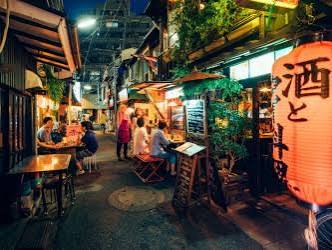
Nishi-Ogikubo is Tokyo's quietest and most refined hidden neighbourhood — a place of antique dealers, independent bookshops, ceramics studios, and an extraordinary concentration of small restaurants serving careful, unhurried food to a local clientele that prizes quality over trend. It sits one station west of Koenji on the Chuo Line but feels several decades removed from it: where Koenji is loud and sociable, Nishi-Ogikubo is contemplative and slow. The neighbourhood has the highest density of antique and secondhand furniture dealers in Tokyo, concentrated in the backstreets north and northwest of the station.
The food culture here is a reflection of the neighbourhood's character: obanzai counters serving home-style Kyoto-influenced small dishes, lunch sets at ten-seat counters where the chef does everything by hand, tea houses with serious matcha and seasonal sweets, and third-wave coffee roasters drawing customers from across the city. An unmarked door might open into a natural wine bar with forty labels by the glass, or a tiny lunch counter serving hand-cut soba to retired regulars who have been coming since the 1980s. This is the Tokyo that people who actually live here spend their weekends in.
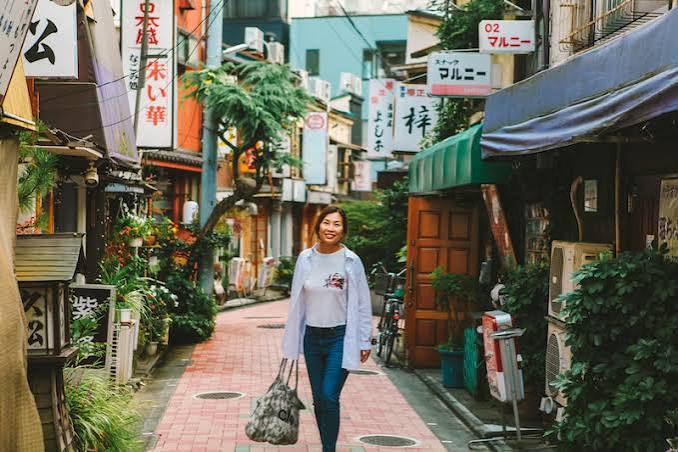
Monzen-Nakacho — known to Tokyoites simply as Mon-Naka — best preserves the eating and drinking culture of pre-war shitamachi Tokyo: a dense cluster of izakayas, standing bars, grilled seafood counters, and oden shops packed into the streets radiating from Tomioka Hachimangu Shrine, one of the most important Shinto shrines in the city. The shrine itself was founded in 1627 and draws enormous crowds to its annual festival in August, but on ordinary evenings it provides a quietly atmospheric starting point before the shotengai takes over.
The shotengai transforms completely after 5pm. What is a pleasant but ordinary shopping street during the day becomes one of the most lively eating and drinking concentrations in the city as darkness falls — queues forming outside the most celebrated izakayas, the smell of charcoal-grilled mackerel and yakitori smoke hanging in the narrow alleys, and the sound of laughter and clinking glasses spilling out of every lit doorway. The drinking culture here is unashamedly old-fashioned: standing at the counter with a cold beer and a plate of oden, watching the neighbourhood come alive, is the experience Mon-Naka exists to deliver.

Senju is the most historically significant and least-visited of Tokyo's great shotengai neighbourhoods — a former post town on the old Tokaido and Nikko highways that served as the last stopping point before travellers left the city heading north. It is here, at the banks of the Sumida River, that the poet Matsuo Basho began his famous 2,400-kilometre journey to the far north in the spring of 1689, an event he recorded in what became the most celebrated travel journal in Japanese literature, Oku no Hosomichi. A small stone monument on the old highway marks the spot.
The shotengai along the old highway corridor is a long, genuinely working food street — fishmongers with whole tuna arranged on ice, multi-generational pickle shops with rows of ceramic crocks, wagashi sweet makers producing seasonal confections by hand, and family butchers who have been on the same corner for three generations. The local community here retains more of the atmosphere and self-sufficiency of pre-war shitamachi Tokyo than almost anywhere closer to the city centre, partly because Kita-Senju has only recently become more accessible by express train, preserving a neighbourhood character that redevelopment pressure has yet to reach.
Active, steady walking pace across multiple neighbourhoods. Comfortable shoes essential.
* Terry's personal transit, food & drinks also included — no hidden costs on the day.
Everything is covered in your flat rate — no out-of-pocket costs on the day. Terry pays every stall, counter, and transit gate quietly in the background.
Comfortable walking shoes essential — shotengai touring means a relaxed but steady pace across multiple neighbourhoods. Dietary restrictions and allergies accommodated if noted at booking.
Every shotengai tour is built around what you want from it. More interested in the food culture? Terry slows down and digs deeper. Want to cover more streets? The pace picks up. Fascinated by the history of shitamachi Tokyo? The stories come with it. You set the agenda.