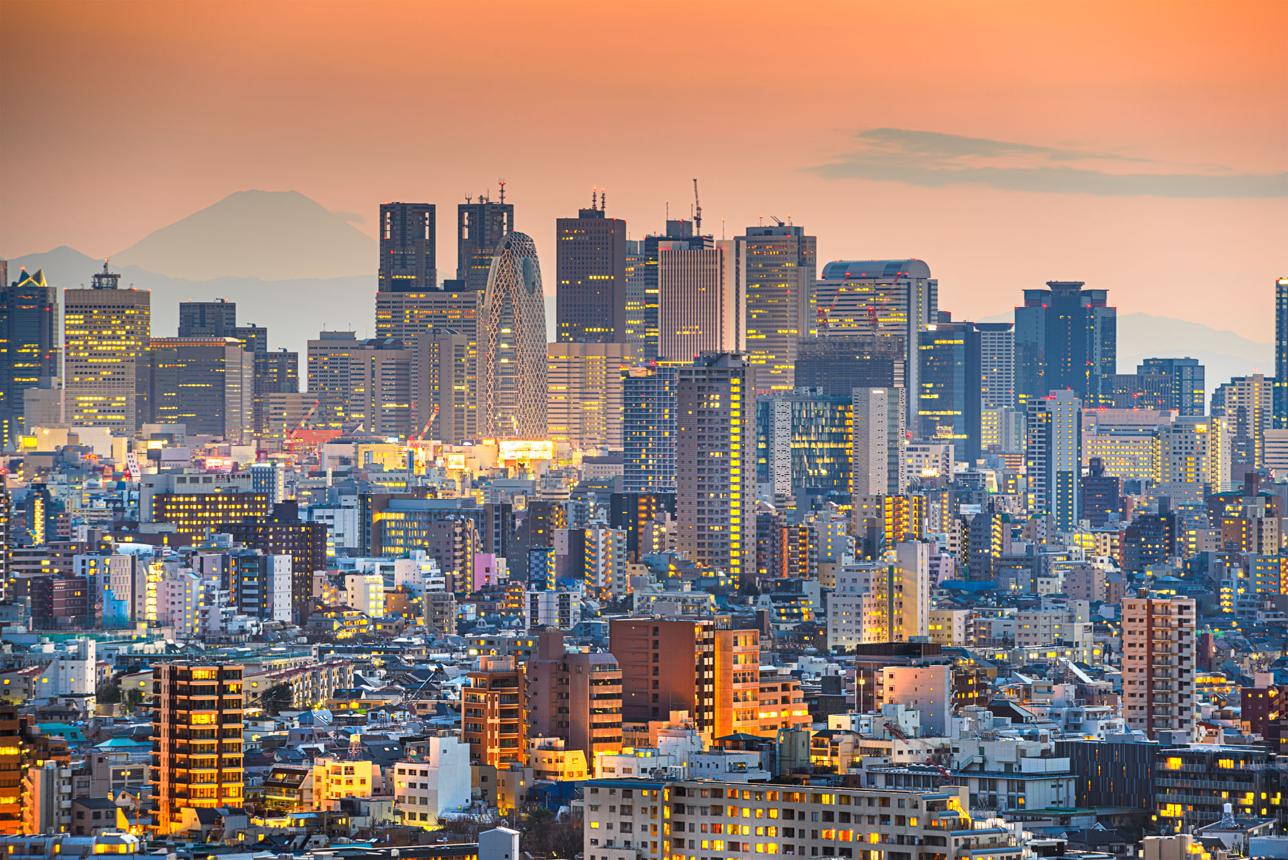
📍 Tokyo · Full day highlights tour
Tokyo
Highlights
Shibuya, Asakusa, Harajuku & more — with local insight at every stop.
From the electric scramble of Shibuya to the forest paths of a centuries-old shrine, this tour threads together the very best of Tokyo — blending ancient tradition with breathless modernity, each stop chosen for its story as much as its spectacle.
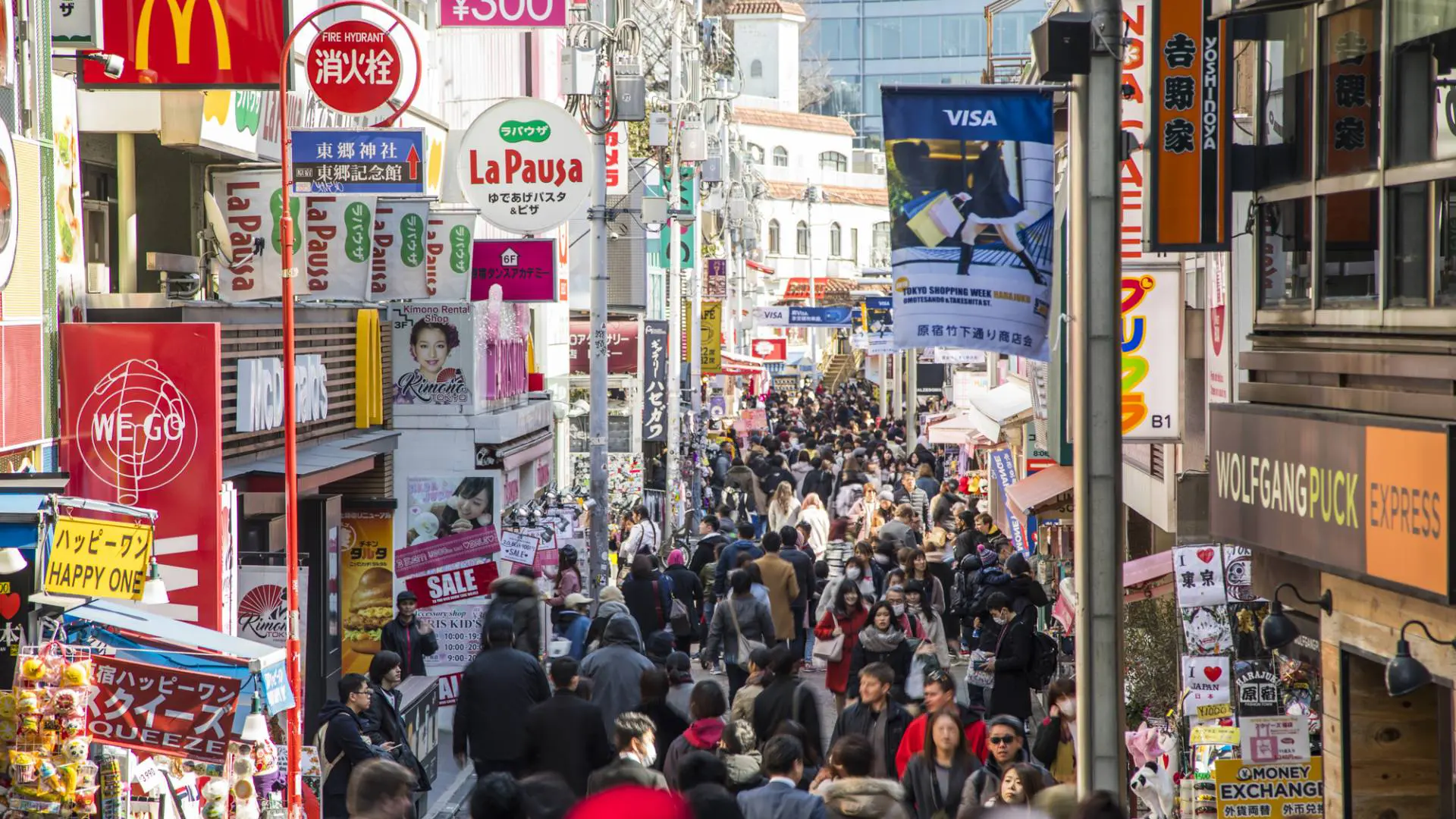
Takeshita Street is a 350-metre pedestrian lane that has been the laboratory of Japanese youth fashion since the late 1970s, when independent clothing stalls began appearing in the covered arcade between Harajuku station and the surrounding backstreets. What emerged over the following decades — Lolita fashion, Visual Kei, Decora, the successive waves of street style that Japanese teenagers invented and refined in this specific corridor — became the most influential youth fashion culture in the world outside the established fashion capitals, inspiring designers from London to New York who made pilgrimages here to understand how a street with no major brands could consistently produce the next aesthetic movement. The Ura-Harajuku backstreets behind the main lane — Cat Street and the surrounding grid — became home to the select shops and independent designers who fed from the same creative energy at a slightly higher price point.
The neighbourhood today operates on two distinct registers simultaneously: the Takeshita-dori lane itself, which remains an extraordinary concentration of youth-facing shops, crepe stands, and the kind of visual spectacle that rewards simply standing still and watching, and the quieter streets immediately surrounding it, where international luxury brands and serious independent fashion labels occupy low-rise buildings that have somehow held on against the redevelopment pressure that has transformed every other part of central Tokyo. Terry moves through both registers, explaining the history of each subculture as the physical evidence of it passes — the shop that launched a particular style, the corner where the weekend street fashion photographers once gathered, the buildings that have witnessed fifty years of reinvention.
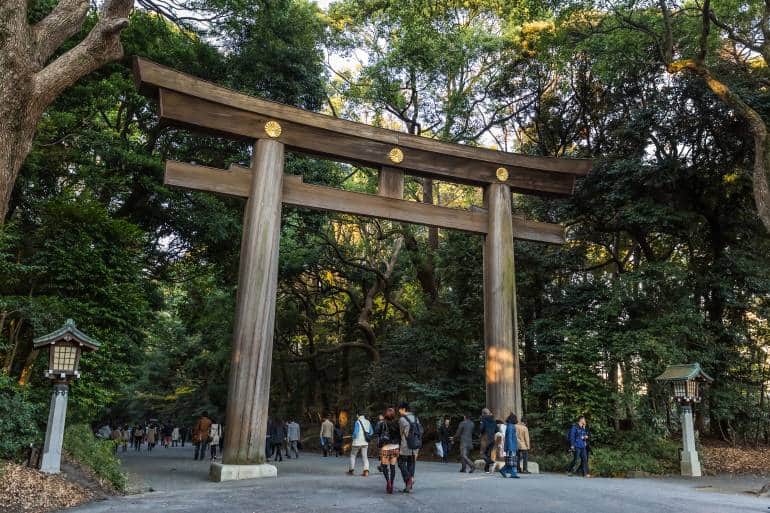
Meiji Jingu is the most important Shinto shrine in Tokyo — a vast forested sanctuary of 70 hectares in the middle of one of the most densely built cities on earth, dedicated to the deified spirits of Emperor Meiji and his consort Empress Shoken. Emperor Meiji presided over Japan's transformation from a feudal society closed to the world to a modern industrial nation open to it, a process compressed into the forty-five years of his reign from 1868 to 1912 that remains one of the most dramatic national reinventions in history. The shrine was built after his death in 1920, and the forest that surrounds it — 100,000 trees of 365 species, planted entirely by volunteers from across Japan over the years of construction — was designed to be a self-sustaining woodland that would reach its mature state within a century. That century has now passed, and the result is extraordinary: a dense, quiet, cathedral-like forest that feels nothing like a planted landscape and everything like ancient woodland.
The approach along the broad gravel path beneath the towering cypress torii gates — the largest wooden torii in Japan — is one of the great arrival sequences in Tokyo, a transition from the noise and density of Harajuku that happens so completely and so quickly that first-time visitors invariably stop and look back in disbelief at how far the city has receded. The inner shrine compound is austere and powerful: pale gravel, plain hinoki cypress wood, the sound of water from the purification fountain, and the particular quality of silence that Shinto architecture creates by closing the view and slowing the pace. On weekend mornings there are almost always traditional wedding processions crossing the compound — the bride in white kimono and a tall headdress, the groom in black formal wear, the family following in formal attire.
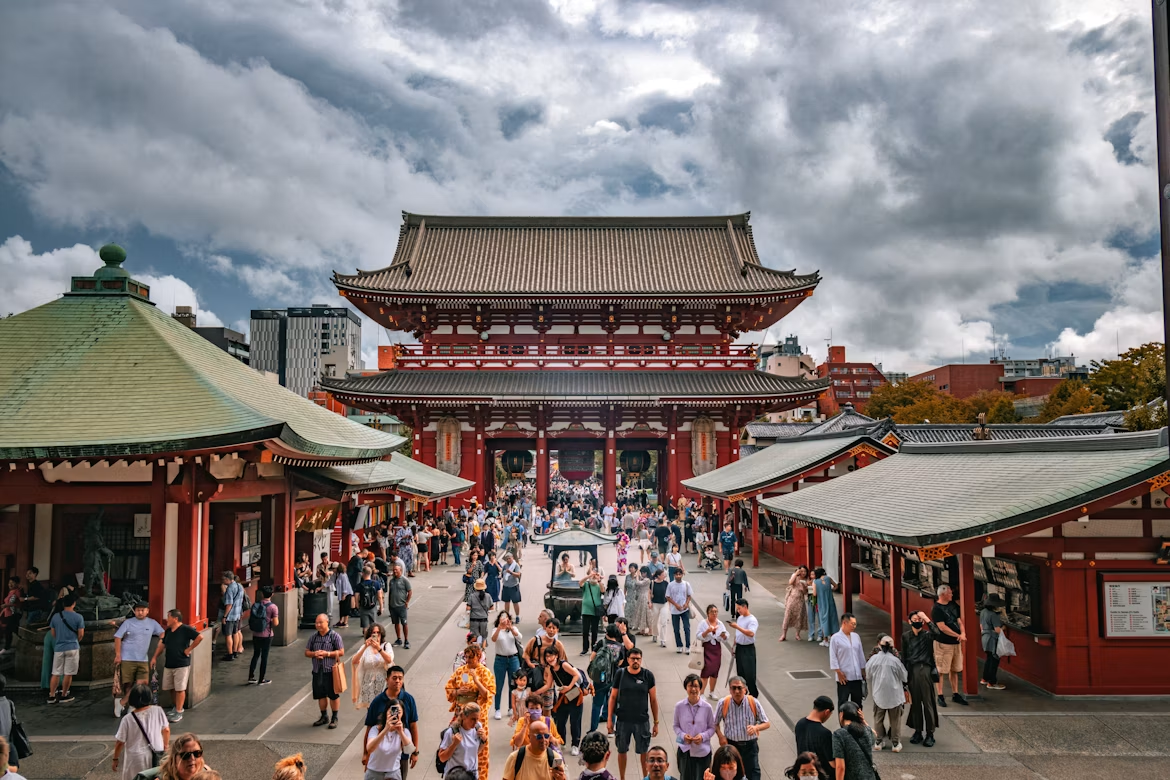
Senso-ji is the oldest temple in Tokyo and, with over 30 million visitors a year, one of the most visited religious sites in the world — yet it remains a genuinely working temple where the daily rhythms of Buddhist practice continue undisturbed by the crowds pressing through the Nakamise shopping street below. The temple's founding legend dates to 628 AD, when two fishermen brothers named Hinokuma Hamanari and Hinokuma Takenari reportedly pulled a small golden image of the Bodhisattva Kannon from the Sumida River in their nets. The local chieftain enshrined the image, dedicated his home as a place of worship, and a community of devotion grew around the site that has been in continuous existence for nearly 1,400 years — rebuilt multiple times, most recently after the 1945 firebombing destroyed the main hall, but never abandoned.
The approach sequence is one of the great pieces of theatrical urban design in Japan: the outer Kaminarimon gate with its enormous 700-kilogram red paper lantern, then the 250-metre covered Nakamise-dori shopping street of traditional stalls, opening finally into the broad stone courtyard before Hozomon gate, beyond which the five-storey pagoda and the main hall stand together in a composition that has been essentially unchanged since the postwar reconstruction. The incense smoke from the large bronze cauldron in the courtyard is considered purifying — visitors wave it toward their bodies before entering the hall — and the smoke-filled air, the sound of the wooden prayer beads being drawn over the offering box, and the deep resonance of the temple bell at certain hours give Senso-ji an atmosphere that no photograph quite captures.
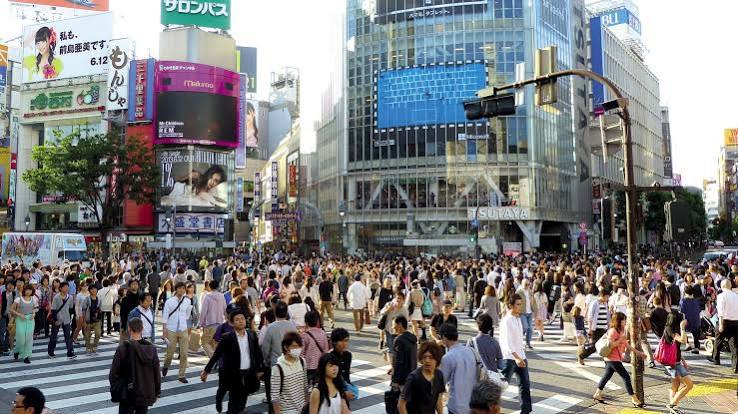
The Shibuya Scramble Crossing is the busiest pedestrian intersection in the world — a five-way junction where all traffic stops simultaneously and pedestrians cross from every direction at once, the flow of people forming a spontaneous choreography that processes up to 3,000 people per cycle during peak hours. The crossing became famous internationally through its appearance in Lost in Translation and countless other films and photographs, but no image prepared by prior viewing quite captures the physical experience of standing at the edge and then being carried into it by the crowd — the sensation is less like crossing a road and more like being part of a liquid that finds its own way through. The crossing sits at the convergence of the Yamanote Line, the Ginza and Hanzomon subway lines, and the Tokyu and Keio private railways, making the immediate area one of the highest-footfall transit nodes in the world.
The view from above — available from the Starbucks on the second floor of the Tsutaya building at the southwest corner, or from the new Shibuya Scramble Square tower observation deck to the east — turns the crossing into something else entirely: a pattern, a rhythm, a piece of unscripted collective behaviour that reveals the extraordinary order underlying what looks, from street level, like controlled chaos. The surrounding Shibuya district has undergone one of the most dramatic urban redevelopments in recent Tokyo history, with several major towers completed in the 2010s and 2020s transforming the skyline above the station, but the crossing itself remains exactly what it has been for decades: the single most vivid expression of Tokyo at full speed.

Shinjuku Gyoen occupies 58 hectares in the geographical centre of one of the densest urban environments on the planet — a deliberate act of imperial breathing space that has outlasted the empire that created it. The garden began as a feudal estate belonging to the Naito clan during the Edo period, was converted into an agricultural research station after the Meiji Restoration, and was redesigned as an imperial garden in 1906. It remained a private retreat for the imperial family until 1949, when it was opened to the public as a national garden. The contrast with its surroundings is the defining visual experience of the place: skyscrapers of the Shinjuku business district are visible above the treeline from almost every angle, yet the interior of the garden manages to feel genuinely removed from the city pressing in on every side.
Three distinct garden styles coexist within the same grounds without conflict: a formal French parterre garden of geometric beds in the southern section, a broad English landscape garden of rolling lawns and specimen trees at the centre, and a traditional Japanese stroll garden in the north with stone lanterns, a Taiwanese pavilion, and koi ponds shaded by maples that turn extraordinary colours in autumn. The Japanese garden section is exceptional in November, when the maples shift through yellow, orange, and deep red against the backdrop of the surrounding towers. In spring Gyoen is one of the finest cherry blossom locations in Tokyo — over 1,500 trees of 65 varieties — and because alcohol is prohibited inside, it attracts a noticeably more composed crowd than the parks where hanami picnics become raucous by midday.
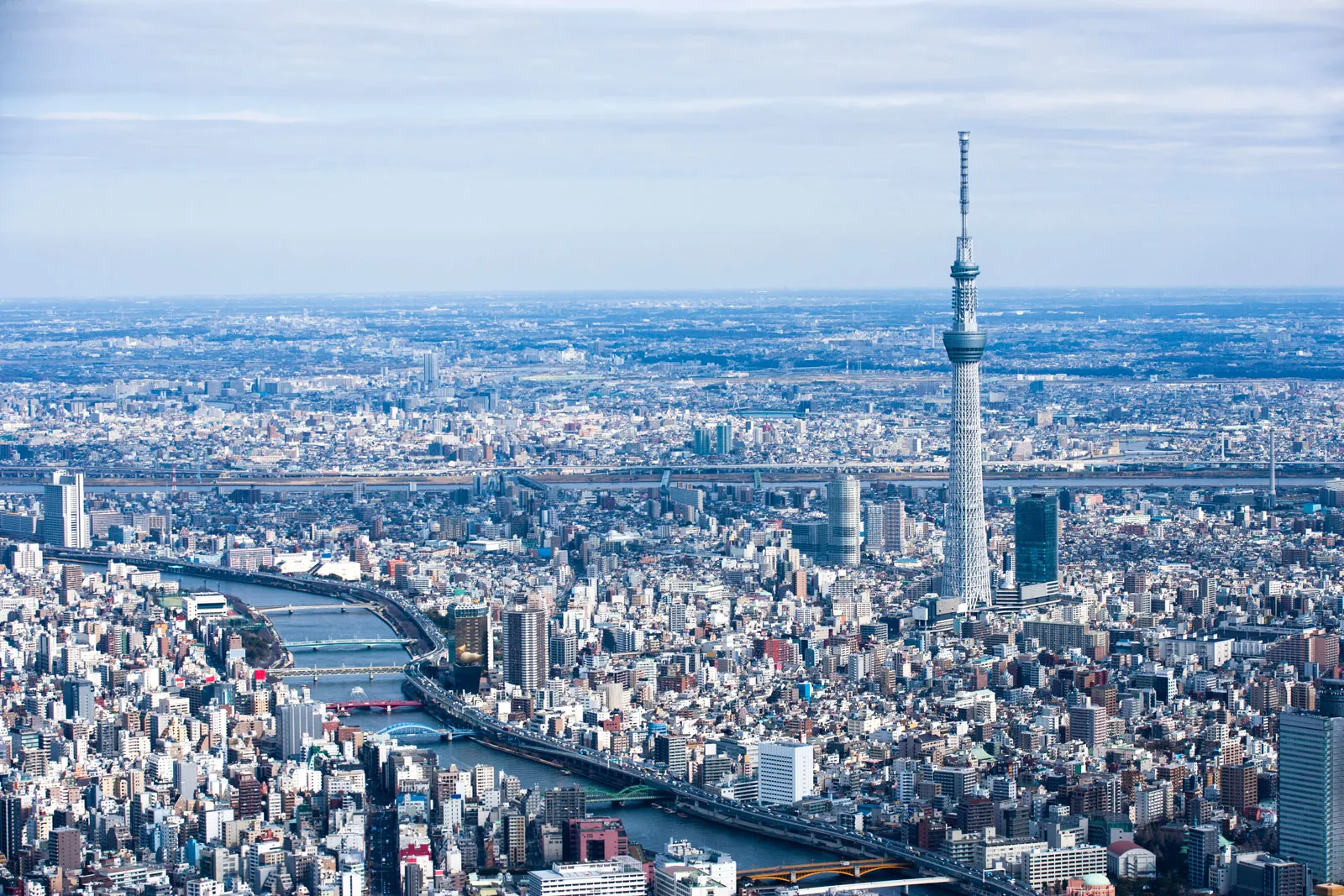
Tokyo Skytree stands at 634 metres — the tallest tower in the world and the second tallest structure of any kind after the Burj Khalifa — and its height is not an accident of engineering ambition but a deliberate choice encoded in the number itself: 634 is read in Japanese as mu-sa-shi, the name of the ancient province that once covered the area where the tower stands. The tower was completed in 2012 to replace the ageing Tokyo Tower as the city's primary broadcast antenna, the older structure having become too short to transmit effectively above the surrounding high-rise buildings that had grown up around it since 1958. The Skytree sits in the Sumida Ward district of Asakusa, directly above the Tobu Skytree Line station, and the complex around its base includes an aquarium, a planetarium, a large shopping mall, and more restaurants than a visitor could eat their way through in a week.
The two observation decks — the Tembo Deck at 350 metres and the Tembo Galleria at 450 metres — offer a perspective on Tokyo that no other elevated point in the city quite matches, because the Skytree stands east of the traditional city centre rather than within it, giving a view that takes in the full sweep of the Yamanote loop to the west, the Tokyo Bay waterfront to the south, the endless suburban plain extending north and east into Saitama and Chiba, and on the clearest winter days Mount Fuji rising above the western horizon 100 kilometres away. The glass floor panel in the Tembo Galleria — a section of transparent flooring that allows you to look straight down 450 metres to the streets below — is either exhilarating or deeply uncomfortable depending on your relationship with heights, and occasionally both at once.
Every Tokyo Highlights tour is built entirely around what you want to take home from the city. Drawn to the temples and old Edo streetscapes? Terry slows the pace and the history deepens. More excited by the neon, the food halls and the pop culture? The route shifts that way instead. You set the direction — Tokyo delivers on every front.
No hidden fees on the day — everything is covered in the flat rate above.