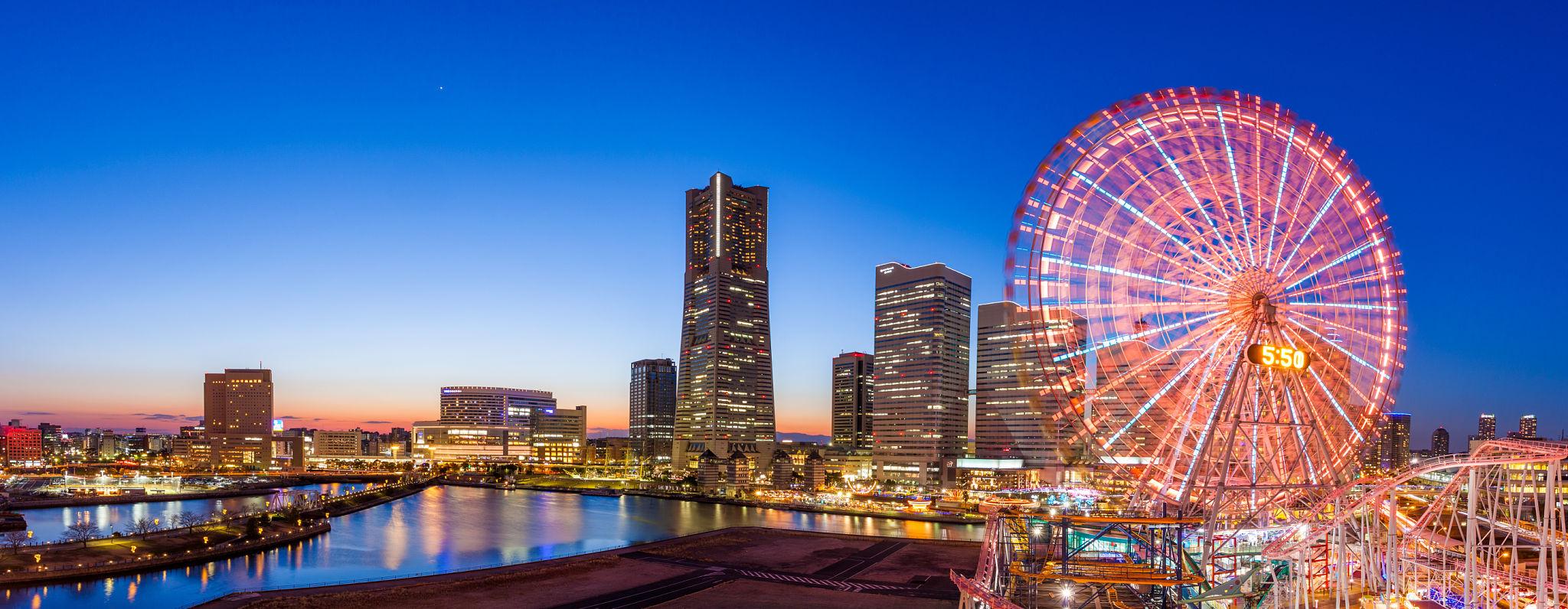
🌊 Maritime Heritage · Neon Skylines
Yokohama & Chinatown
Waterfront promenades, rich historic districts, and the incredible food paths of Japan's largest Chinatown.
Yokohama has a personality completely its own — Japan's most international city, shaped by centuries of global trade and cultural intersection. Terry will guide you through the historic Yamate bluff where early foreign merchants lived, across the vibrant architecture of Chinatown, along the sleek Minato Mirai harborfront, and into timeless districts that seamlessly blend old and new.
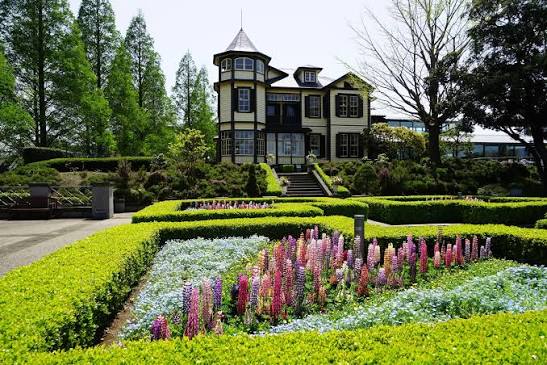
The Yamate Bluff has been Yokohama's foreign residential quarter since 1859, when the port opened to international trade after centuries of Japanese isolation and foreign merchants, diplomats, and missionaries were granted land here to build homes away from the crowded port below. Unlike the Chinatown grid down the hill, Yamate developed along winding lanes following the natural contours of the bluff, and a number of the Western-style houses from this era survive, several relocated and preserved as small museums furnished in period style — Victorian interiors, pianos, and gardens that feel transplanted from 19th-century Europe or America onto a Japanese hillside. The area also contains the Yokohama Foreign General Cemetery, the resting place of many of the merchants, sailors, and diplomats who lived and died here during the treaty port era, with gravestones in a dozen languages telling the story of the international community that shaped early modern Yokohama.
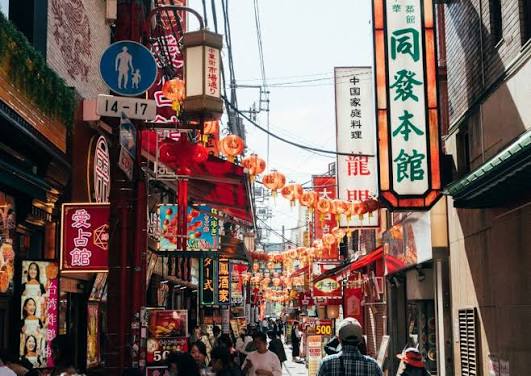
Yokohama Chinatown is the largest in Japan and one of the largest in Asia, its origins tracing back to 1859 when Chinese merchants — many acting as intermediaries between Japanese and Western traders who shared no common language — settled in this part of the newly opened port. Ten ornate gates, each dedicated to a different direction and guardian deity according to feng shui principles, mark the boundaries of the district, and within them over 600 restaurants and shops pack a grid of streets barely a few hundred metres across. The food culture here represents nearly every regional Chinese cuisine — Cantonese, Sichuan, Shanghainese, Beijing-style — brought by successive waves of immigration over more than 150 years, alongside temples, including the Kanteibyo temple dedicated to Guan Yu, a revered historical general now worshipped as a god of wealth and prosperity, whose ornate gold-and-red architecture stands out sharply against the surrounding streets.
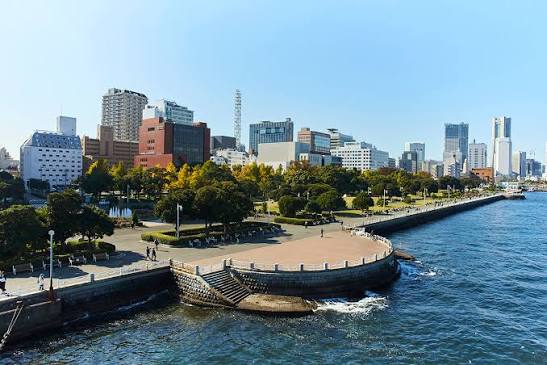
Yamashita Park opened in 1930 on land reclaimed using rubble from the Great Kanto Earthquake of 1923, which devastated Yokohama along with Tokyo — making the park itself a piece of the city's recovery story, built quite literally from the wreckage of disaster. The long waterfront promenade runs directly along the bay, with views across to the futuristic skyline of Minato Mirai and out toward the harbour's working shipping lanes. Permanently docked at the park's edge is the Hikawa Maru, a 1930 ocean liner that once made regular crossings to Seattle carrying both passengers and cargo, including, on one famous occasion, a young Charlie Chaplin — now preserved as a floating museum offering a glimpse into the golden age of transpacific travel. The park is a genuine green space for the city, used by joggers, families, and office workers on lunch breaks, with rose gardens that bloom in spring and autumn adding colour along the promenade.
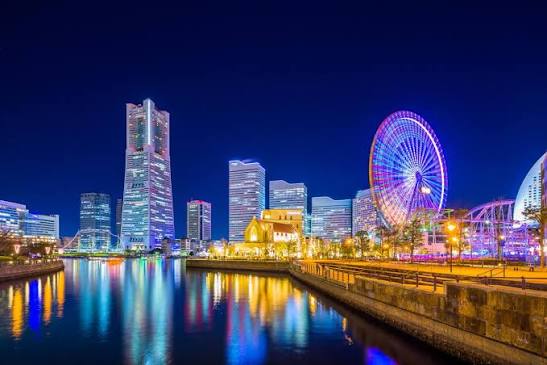
Minato Mirai 21 — "Harbour of the Future, 21st Century" — is a large-scale waterfront redevelopment begun in the 1980s on the site of former shipyards and rail yards, transforming what was once industrial port infrastructure into one of Japan's most striking modern skylines. The Landmark Tower, completed in 1993, was Japan's tallest building for over a decade and still dominates the skyline, while the Cosmo Clock 21 Ferris wheel — for a time the largest clock in the world — has become an iconic nighttime landmark, its illuminated face visible across the bay. Interspersed among the glass towers are carefully preserved red-brick warehouses from the original port, now repurposed as shopping and dining spaces, creating a deliberate juxtaposition between Yokohama's industrial past and its reimagined future. The whole district was essentially built from scratch on reclaimed and redeveloped land, making it a useful counterpoint to the organic, historically layered districts visited earlier in the day.
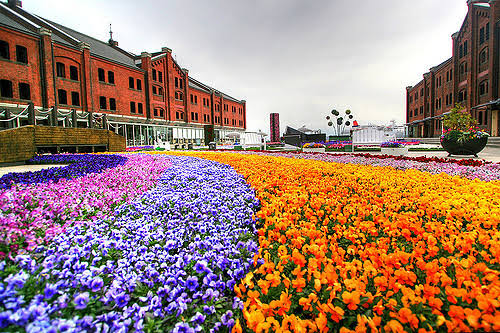
Aka Renga Soko — the Red Brick Warehouse — is a pair of late Meiji-era port warehouses completed in 1911 and 1913 that served as customs storage facilities for Yokohama's booming international trade until the port's operations shifted in the postwar decades. The buildings are among the finest surviving examples of Western-influenced industrial architecture in Japan: deep-red brick facades, arched windows, cast-iron structural elements, and broad timber floors that have been carefully restored without being overpolished. After years of abandonment following port decommissioning, the complex was reopened as a cultural and commercial venue in 2002 and has since become one of Yokohama's most distinctive public spaces.
The two warehouse buildings operate on slightly different models — Warehouse No. 1 focuses on events, exhibitions, and performance spaces, while Warehouse No. 2 houses shops, cafes, and restaurants spread across its original internal structure. But the real draw is the setting: the broad brick esplanade between the buildings and the waterfront, with unobstructed views across the harbour to the Minato Mirai skyline, is one of the finest public spaces in the Kanto region. On weekend afternoons it fills with Yokohama residents enjoying the open air in a way that feels genuinely local rather than tourist-staged. The harbour light in the late afternoon, bouncing off the water and warming the red brick, is exceptional.
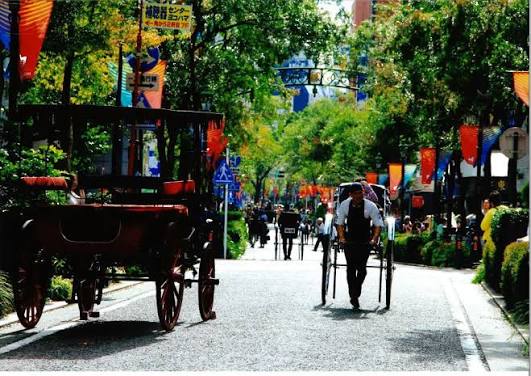
Bashamichi — literally "carriage road" — takes its name from the horse-drawn carriages that ran along this wide, gas-lamp-lit boulevard in the Meiji era, making it the first Western-style street in Japan. When Yokohama's port opened to foreign trade in 1859, this district became the commercial and social heart of the foreign settlement: trading houses, banks, newspaper offices, and the offices of international merchants lined what was then an unpaved track widened specifically to accommodate carriage traffic. The gas lamps that still line the street today are replicas of the originals installed in 1871 — the first gas street lighting in Japan, another of Yokohama's many firsts.
The street retains an unusually coherent Meiji and Taisho-era streetscape, with a succession of handsome Western-influenced bank buildings and merchant houses now repurposed as cafes, restaurants, and small galleries. The Kanagawa Prefectural Museum of Cultural History, housed in a magnificent domed Baroque building completed in 1904 that originally served as the Yokohama Specie Bank, anchors one end of the boulevard and is worth entering for the architecture alone. Walking Bashamichi in the late afternoon — when the gas lamps begin to glow and the brick and stone facades take on a warm light — gives a remarkably vivid sense of the cosmopolitan, outward-looking city that Yokohama was during Japan's great opening to the world.
No hidden costs on the day — everything is covered in your flat rate above.
* Can be combined with a Kamakura extension — ask Terry about a custom two-destination day.
Everything is covered in your flat rate — no out-of-pocket expenses on the day. Terry pays for all transit and entry tickets quietly in the background.
Yokohama pairs beautifully with a Kamakura extension — ask Terry about combining both destinations into a custom two-destination day.
All guiding is strictly private — just your group and Terry. No strangers, no rigid bus schedules, no rushing.
Every itinerary is completely exclusive to your party, crafted to match your exact pace, curiosities, and aesthetic style. Since this is a completely tailored, private experience, Terry seamlessly syncs tracking options to accommodate dynamic culinary detours or landscape photography targets without any stress.
Check Terry's calendar availability and submit your tour booking request instantly.